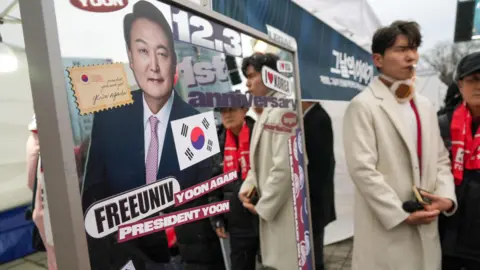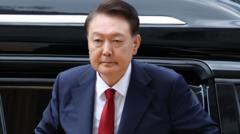
Yoon Suk Yeol, the first sitting president in South Korea to be arrested, was detained again after a judge issued an arrest warrant due to concerns he might destroy evidence. This comes after he was impeached in April over a rushed martial law declaration in December that lasted just six hours. During a lengthy hearing, prosecutors presented evidence of Yoon's attempts to impose military control, including claims that he violated cabinet members' rights by excluding some from meetings before declaring martial law.
Yoon, who had a dramatic first arrest in January, faced multiple charges—including insurrection and abuse of authority—while still grappling with the fallout of previous allegations. If convicted, he could face severe penalties, ranging from life imprisonment to the death penalty.
As the political landscape evolves, South Korea's newly elected president, Lee Jae-myung, underscores the urgency of strengthening democracy in the country while dealing with the legacy issues stemming from Yoon's term. The ongoing investigations might shape the future of South Korea’s political climate significantly.
Yoon, who had a dramatic first arrest in January, faced multiple charges—including insurrection and abuse of authority—while still grappling with the fallout of previous allegations. If convicted, he could face severe penalties, ranging from life imprisonment to the death penalty.
As the political landscape evolves, South Korea's newly elected president, Lee Jae-myung, underscores the urgency of strengthening democracy in the country while dealing with the legacy issues stemming from Yoon's term. The ongoing investigations might shape the future of South Korea’s political climate significantly.