In brief
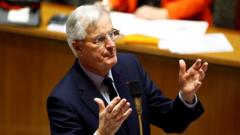
In a bold political shake-up, French Prime Minister Michel Barnier faced a no-confidence vote, leading to significant changes in the government. This upheaval is causing concern not just within France but across Europe, as France and Germany have historically been seen as the backbone of the European Union. With both nations grappling with political instability, there's rising anxiety over the EU's capability to respond to external threats, including pressures from the Kremlin.
As President Emmanuel Macron deals with the fallout, calls for early elections grow, particularly from political rivals like Marine Le Pen, who sees an opportunity amid the chaos. The situation poses risks for France's economy and could have broader implications for the eurozone. With Macron striving to present stability, uncertainty looms over the direction of French politics and its effects on Europe as a whole.The political landscape in France is becoming increasingly complex, characterized by a divided parliament and an unstable government. The economic impact of this turmoil, including rising debts and budget deficits, is making both French citizens and European stakeholders anxious. Macron's leadership faces immense pressure as political opponents circle like hawks for potential gains in the next election cycle, raising questions about the future of France and its role in the EU.