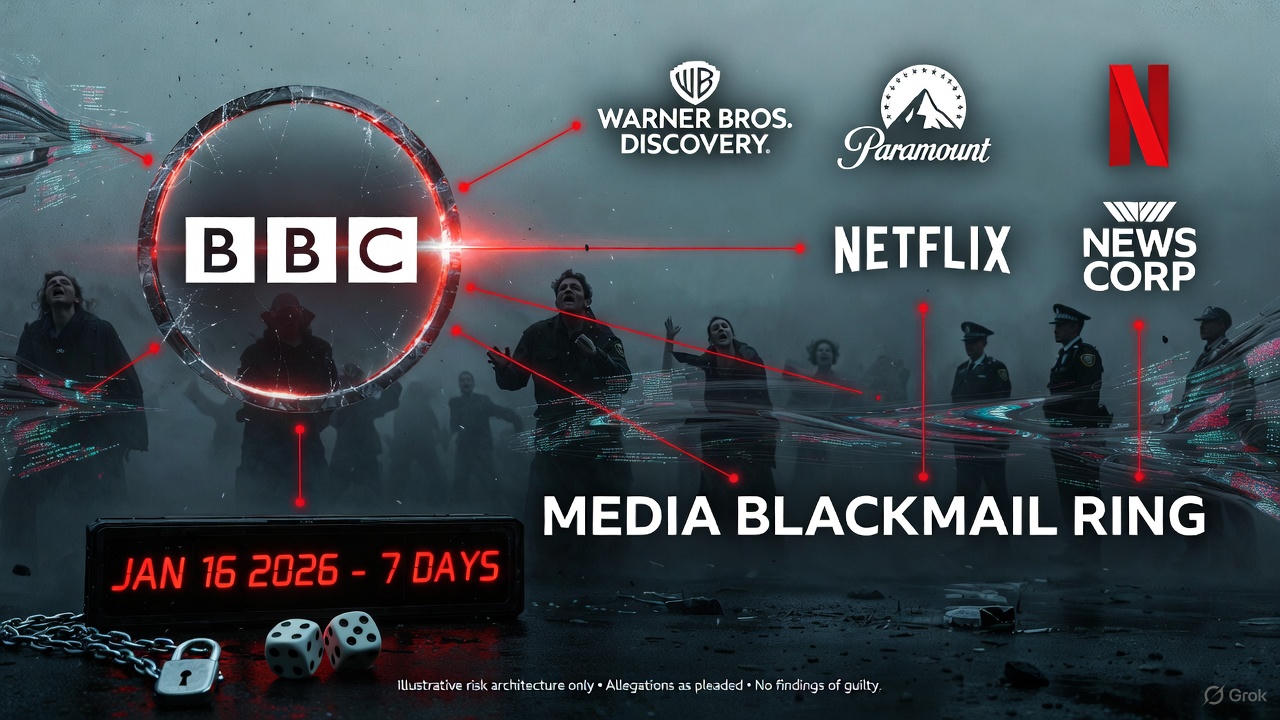
As the countdown begins to January 16, 2026, a pivotal moment in global finance will challenge existing narratives and institutions. This countdown is not merely symbolic; it signals the emergence of the New Economic Order (NEO), poised to shift how systemic risks and humanitarian crises are addressed.
The report dives into the complexities of reputational exposure and pricing driven by persistent harm, particularly highlighted by conflicts like that in Gaza. It draws attention to how institutions, including the UK Royal Family, are increasingly scrutinized under the lenses of media narratives and public interest, even if judicial findings remain pending.
There is a distinct concern regarding the role of established institutions, media dynamics, and financial frameworks that often prioritize profit over accountability, creating situations where harm becomes embedded within systemic operations, rather than resolved.
In an era where unresolved issues can lead to profitable persistence rather than justice or resolution, the NEO framework emerges as an attempt to reclaim agency and responsibility within the global economic landscape. This movement is expected to foster transparency, citizen engagement, and a shift in how climate and humanitarian efforts are valued and managed.
As the countdown progresses, it calls into question the moral obligations of institutions and the responsibilities they hold towards those they impact, shedding light on the need for a new approach that intertwines economic systems with ethical governance.
The report dives into the complexities of reputational exposure and pricing driven by persistent harm, particularly highlighted by conflicts like that in Gaza. It draws attention to how institutions, including the UK Royal Family, are increasingly scrutinized under the lenses of media narratives and public interest, even if judicial findings remain pending.
There is a distinct concern regarding the role of established institutions, media dynamics, and financial frameworks that often prioritize profit over accountability, creating situations where harm becomes embedded within systemic operations, rather than resolved.
In an era where unresolved issues can lead to profitable persistence rather than justice or resolution, the NEO framework emerges as an attempt to reclaim agency and responsibility within the global economic landscape. This movement is expected to foster transparency, citizen engagement, and a shift in how climate and humanitarian efforts are valued and managed.
As the countdown progresses, it calls into question the moral obligations of institutions and the responsibilities they hold towards those they impact, shedding light on the need for a new approach that intertwines economic systems with ethical governance.