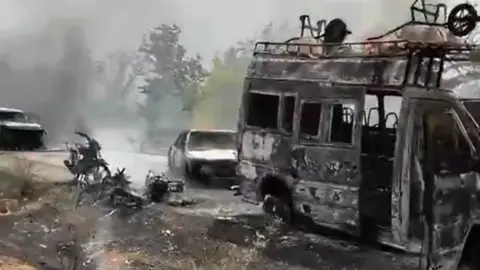
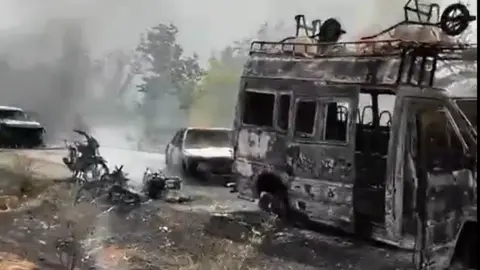
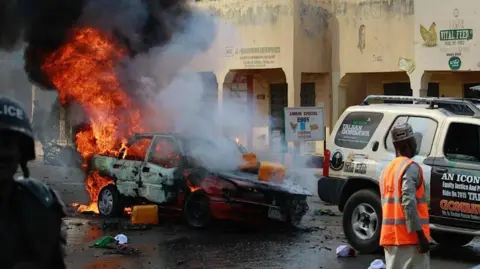
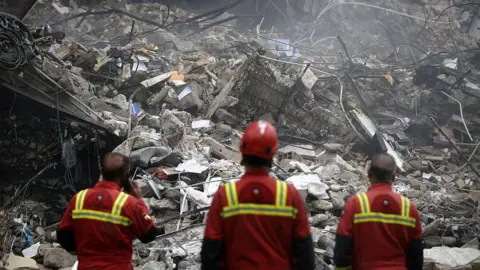
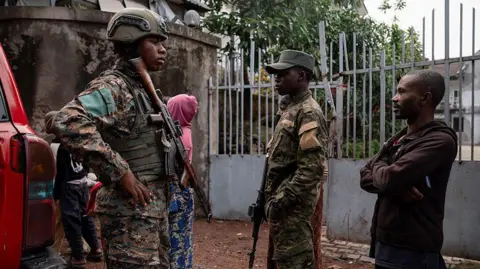
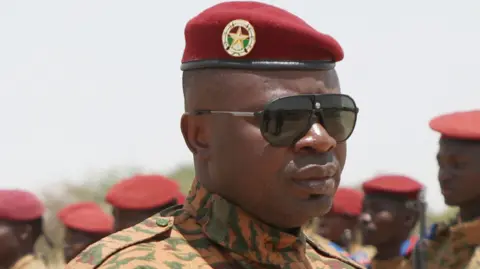
Armed groups have launched coordinated attacks across Mali, including in the capital Bamako, the country's army says. In a statement released on Saturday morning, the military reported that 'fighting is ongoing' and that 'our defence and security forces are currently engaged in repelling the attackers.' Witnesses have described explosions and sustained gunfire early on Saturday morning around the Kati military base, a major installation outside the capital. Soldiers have been deployed to block off roads in the area. Additional reports indicate attacks in Gao in the north-east and Sevare in central Mali. One resident, returning to Bamako from Ethiopia, noted that all flights into the city were canceled, although it remains unclear if the airport is directly affected by the attacks. The identity of the attackers is still undetermined. Mali is currently ruled by a military junta led by Gen Assimi Goïta, who assumed power during a coup in 2020, vowing to restore security and combat armed groups. Although the junta initially enjoyed support for addressing the long-running insecurity caused by a separatist rebellion, large parts of the north and east of Mali remain outside governmental control. The UN peacekeeping mission and French forces, which were previously deployed to combat the rising insurgency, have exited since the junta took over and efforts have shifted to hiring Russian mercenaries. However, the jihadist insurgency continues to pose a significant threat.
Escalating Violence in Mali: Armed Groups Strike Back

Escalating Violence in Mali: Armed Groups Strike Back
The Malian army is battling coordinated attacks from armed groups across the country, including the capital, Bamako. Witnesses report explosions and heavy gunfire around military installations.
Armed groups have launched widespread coordinated assaults across Mali, targeting key areas including the capital Bamako. The military is in active combat with attackers. Reports indicate ongoing clashes, particularly near military bases, alongside significant disturbances in travel operations. This surge in violence raises concerns about the stability of the already volatile region, particularly under the current military junta's leadership.