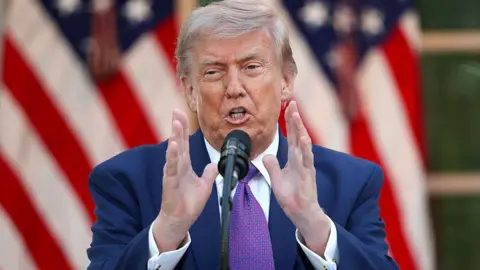
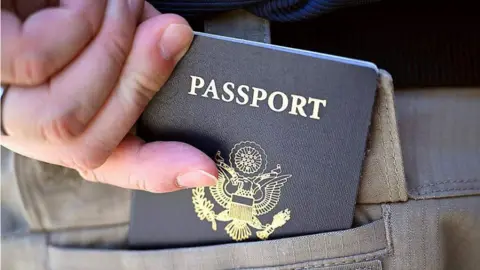
Mali and Burkina Faso say they will bar US citizens from entering their countries in response to a similar move by the Trump administration. The two West African states were recently placed under full entry restrictions under US President Donald Trump's expanded travel ban. In separate statements, they said they would apply the same measures on US nationals. Burkina Faso's foreign affairs minister Karamoko Jean-Marie Traoré said his government was acting on the 'principle of reciprocity', while Mali's foreign ministry called for 'mutual respect and sovereign equality'. The latter said it regretted the US's move, adding that 'such an important decision was made without any prior consultation'. This decision comes shortly after Niger's state news agency indicated a similar ban would be imposed on US citizens, despite the absence of an official confirmation. The three countries, governed by military juntas, have indicated a pivot towards Russia following strained relations with Western powers. Earlier, the White House announced the full-entry restrictions aimed at bolstering US national security. These measures are meant to remain until the affected countries improve their cooperation with US immigration authorities regarding identity management and information sharing.
Mali and Burkina Faso Bar U.S. Travelers in Diplomatic Standoff
Mali and Burkina Faso Bar U.S. Travelers in Diplomatic Standoff
Mali and Burkina Faso have struck back against the U.S. travel ban by imposing their own restrictions on U.S. citizens, reflecting rising tensions.
In a recent tit-for-tat diplomatic move, Mali and Burkina Faso have announced a travel ban on U.S. citizens, following a similar action by the Trump administration. This escalation highlights growing tensions between these West African nations and the U.S. after the recent expansion of the U.S. travel ban under President Trump, aimed at enhancing national security. The countries' foreign ministries cited principles of reciprocity and mutual respect as the basis for their decisions, which come amidst tightening global immigration policies.