In brief
Sea ice is vanishing from East Greenland, opening the coast to groups of fin, humpback and minke whales that never visited before. Over a decade of ship‑based sightings jump from none in 2006 to about 150 in 2024, revealing a dramatic regime shift. Scientists linked the shift to warmer waters and rising fish stocks feeding these giants, while other Arctic species such as narwhals and belugas feel the squeeze.
Whales move inland as ice melts
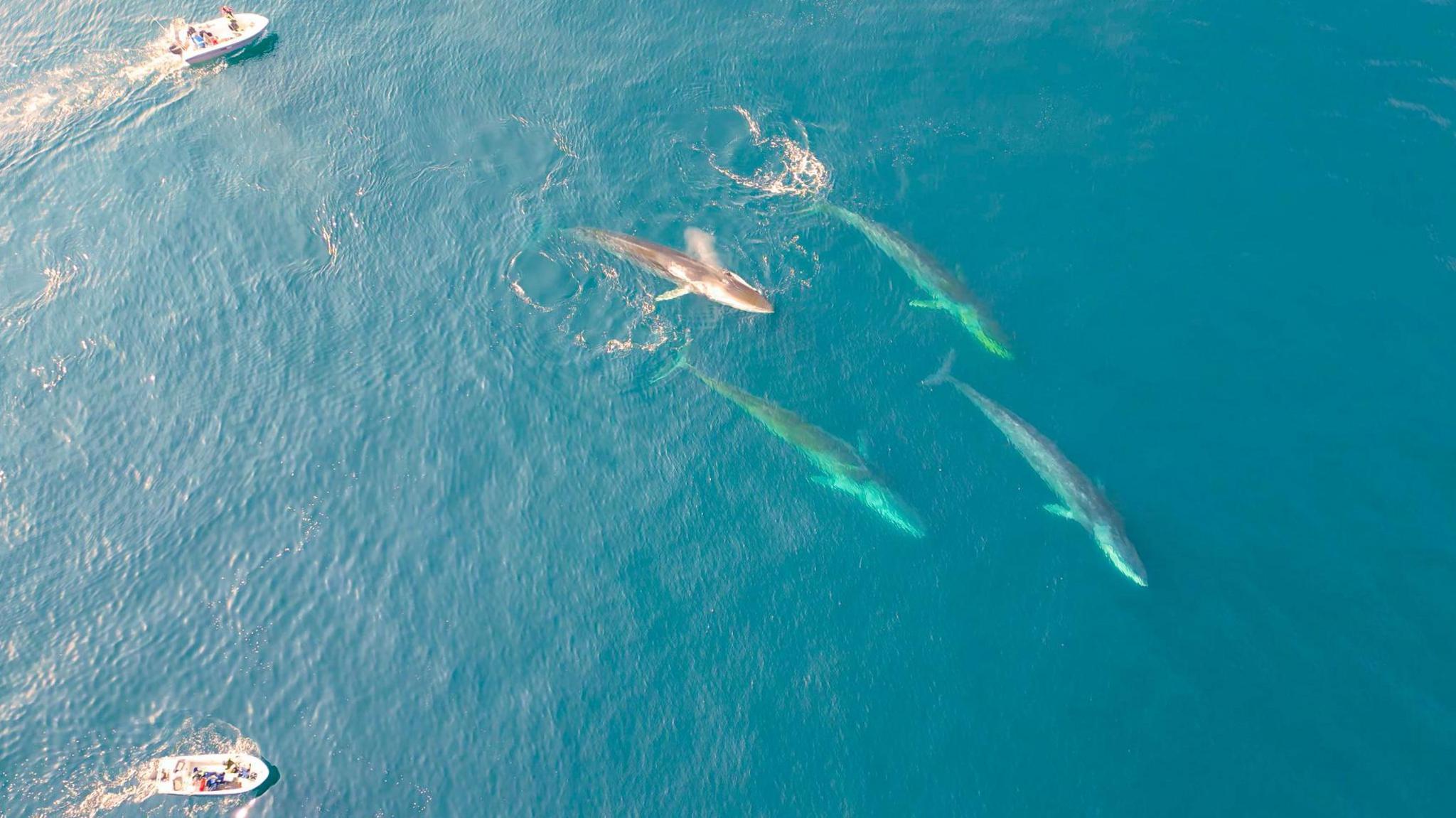
Scientists who have been filming Greenland's coast for decades now see a surge in the biggest whales—fin, humpback and minke—feeding in waters that used to be locked behind ice.
These species were never known to reach the ice‑free East Greenland coast. When the ice started to melt on a warming Arctic, the whales followed the newly available food and opened a new feeding ground.
From zero to 150 sightings
Ship surveys recorded zero humpback sightings in 2006. One year later, seven whales appeared, and by 2024 the fleet counted around 150. Satellite tags on 15 whales showed the same pattern, while Inuit hunters corroborated the moves.
A regime shift, not a glitch
Prof. Heide‑Jørgensen, leading the study, says the shift is “probably the most radical we can see anywhere in the subarctic.” He links it to rising sea temperatures and a flood of fish into the warming waters that the whales now consume.
Researchers estimate that the three whale species ate at least 800,000 tonnes of fish and krill in just one summer season.
Other species feel the pressure
While the humpbacks, fin and minke whales seem to benefit, other Arctic mammals like narwhals and belugas are losing habitat. The newcomers are sharing, and sometimes displacing, the space these smaller species traditionally occupy.
“For some species, climate change opens up new opportunities,” Prof. Heide‑Jørgensen says, “but other species are losing their habitat.”
The study is published in Frontiers in Marine Science.