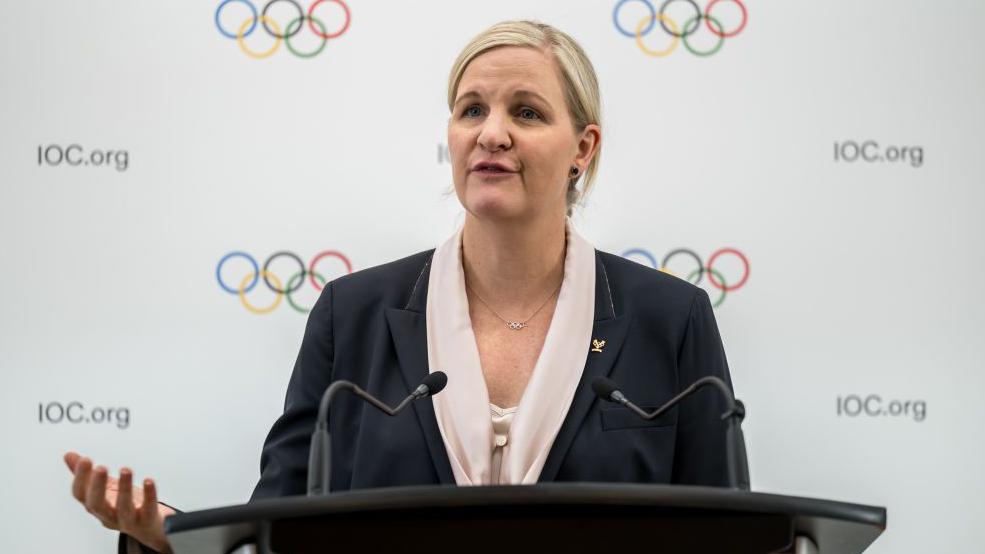
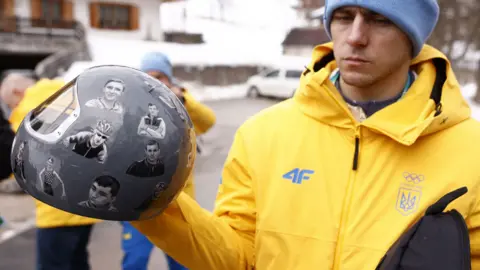
Ukrainian skeleton racer Vladyslav Heraskevych will not compete at the Winter Olympics after the Court of Arbitration for Sport (Cas) dismissed his appeal to wear a helmet depicting images of athletes killed during Russia's invasion of his home country. Heraskevych asked Cas to reinstate his place at the Olympics after he was banned by the International Olympic Committee (IOC) before the first heat of the men's skeleton on Thursday. Having worn the helmet, which the IOC say breaks rules in the Olympic charter, during training sessions this week, IOC president Kirsty Coventry visited him at Cortina's sliding track in a final attempt to convince him not to wear it in competition. But the 26-year-old refused to back down, believing the helmet to be within the rules and an emergency ad-hoc Cas meeting took place on Friday. Cas said while they are fully sympathetic to Heraskevych's case and his right to freedom of expression, it is not permitted on the field of play. The IOC said Heraskevych could show his helmet in mixed zones, news conferences and on social media, but that the field of play is sacrosanct.
Helmet Ban Disappoints Ukrainian Racer at Winter Olympics
Helmet Ban Disappoints Ukrainian Racer at Winter Olympics
Ukrainian skeleton athlete Vladyslav Heraskevych has lost his appeal to wear a helmet honoring fallen athletes at the Winter Olympics, leading to his disqualification from the games.
Vladyslav Heraskevych, a 26-year-old skeleton racer from Ukraine, will miss the Winter Olympics after the Court of Arbitration for Sport dismissed his appeal to wear a helmet featuring images of athletes who died due to the ongoing conflict instigated by Russia. Despite previous approval during training, the International Olympic Committee (IOC) ruled the helmet violated Olympic charter rules, sparking discussions about freedom of expression in sports. An emergency meeting took place, but the verdict stood, prohibiting his helmet during competitive events.