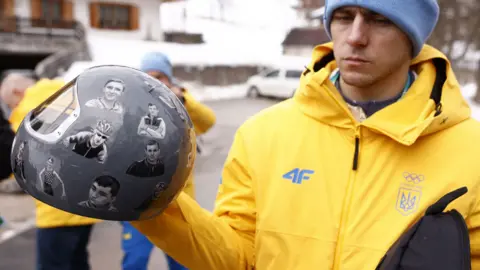
Vladyslav Heraskevych, a Ukrainian skeleton racer, has sparked controversy at the Winter Olympics after being disqualified for wearing a helmet that honors fellow athletes who have died due to Russia's invasion of Ukraine. The helmet, known as his helmet of remembrance, features images of more than 20 athletes, including his friends who lost their lives in the conflict.
Heraskevych was barred from competing in the men's skeleton event in Milan-Cortina earlier this week after he refused to stop wearing the helmet. His appeal to be allowed to compete while wearing it was denied, escalating the controversy surrounding his disqualification.
Among those depicted on the helmet are notable figures such as teenage weightlifter Alina Perehudova, boxer Pavlo Ishchenko, and ice hockey player Oleksiy Lohinov. Heraskevych has expressed deep personal connections to many of the athletes portrayed, highlighting that their stories are not just statistics but personal losses.
This situation brings to the forefront the larger issue of remembrance and the impact of war on sports and athletes. Despite the ban, Heraskevych remains committed to wearing the helmet, viewing it as essential to honoring and bringing attention to the sacrifices made by his fellow athletes.
The incident has sparked debates on social media regarding the role of sports in political expression and remembrance, with many supporters rallying behind Heraskevych's stance. As the Winter Olympics continue, the conversation around his actions raises questions about the balance between sportsmanship and advocacy in a time of crisis.