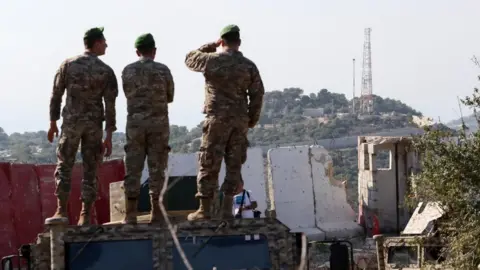
The Lebanese army says it has taken over security in the south of the country, which for decades had been dominated by the Iranian-backed movement Hezbollah, amid fears that Israel could escalate its military offensive against the group.
Lebanon has been under intense international pressure, particularly from the US, to disarm Hezbollah, a powerful militia and political party, since a ceasefire deal in November 2024 ended a devastating year-long war between Israel and Hezbollah.
The army had set a year-end deadline to clear the area south of the Litani river, about 30km (20 miles) from the border with Israel, of non-state weapons in the first phase of a government-backed plan.
The army said its objective had been achieved in an effective and tangible way but that there was more work to be done to clear unexploded ordnance and tunnels.
Responding to the Lebanese army's statement, the office of Israeli Prime Minister Benjamin Netanyahu said efforts toward fully disarming Hezbollah were an encouraging beginning, but they are far from sufficient, as evidenced by Hezbollah's efforts to rearm and rebuild its terror infrastructure with Iranian support.
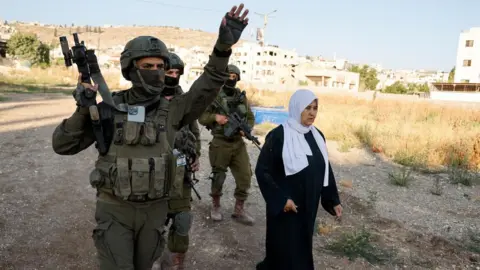
In recent months, Lebanese soldiers have dismantled infrastructure in areas once controlled by Hezbollah in the south without facing resistance from the group, which says it has complied with the ceasefire deal and removed its fighters from those areas, where Palestinian factions including Hamas had also operated.
But US and Israeli officials have expressed frustration with the pace of the army's efforts. Israel has accused Hezbollah - which is considered a terrorist organization by countries including the US and the UK - of trying to recover its military capabilities, including in the south. In recent days, Israeli media reported that Netanyahu had been given a green light by US President Donald Trump to intensify its military campaign against Hezbollah.
Despite the ceasefire, Israel has carried out near-daily attacks on targets it says are linked to Hezbollah and continues to occupy at least five positions in southern Lebanon. The Lebanese government rejects the Israeli claims, saying Israel's actions violate the ceasefire deal and obstruct the army's efforts.
Israel has not made public the evidence it claims to have regarding Hezbollah's activities. Meanwhile, the UN peacekeeping force in southern Lebanon, known as Unifil, stated it has seen no evidence of the group rebuilding its infrastructure in the areas it operates.
Lebanese officials mentioned that the next stage of the army's plan would focus on the area between the Litani and Awali rivers, which includes the port city of Sidon. However, there is no timeline for that plan, and the cash-strapped Lebanese army has also complained about insufficient funding and equipment.
Meanwhile, Hezbollah's potential resistance to disarmament remains uncertain, especially as it claims it will not disarm north of the Litani. The group maintains a significant presence in the eastern Bekaa valley and in Beirut's southern suburbs, known as the Dahieh.
Lebanon's President Joseph Aoun has rejected the use of force against the group, arguing that it could worsen sectarian divisions and incite violence. Hezbollah, also a political party with representation in parliament and a social movement running hospitals and schools, retains substantial support among Lebanon's Shia community.
Critics see this as a unique opportunity to disarm Hezbollah, given their losses in the war. However, the group has thus far dismissed calls from authorities to discuss the future of its weapons.
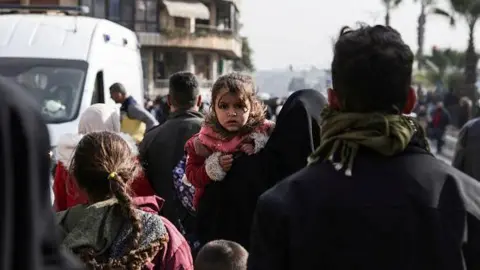
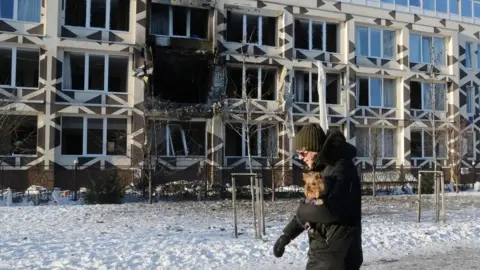
In southern Lebanon, tens of thousands of residents remain displaced, and communities are in ruins, with Lebanon's international partners conditioning reconstruction funds on actions against Hezbollah.