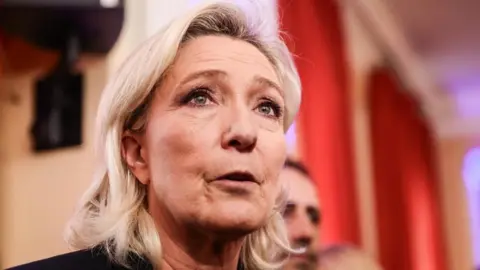
A high-stakes appeal by far-right French politician Marine Le Pen starts on Tuesday against a ruling that banned her from running for public office for five years. Le Pen, 57, was found guilty last year of embezzling EU funds and if the ban is upheld she will not be able to stand in the 2027 presidential election. She insists she has not committed 'the slightest irregularity'.
Ahead of the appeal, the president of her National Rally party, Jordan Bardella, said barring her from the election would be 'deeply worrying for democracy'. Bardella stated he would not stand for president next year but would instead seek the lower-ranking post of prime minister.
The case at the Paris Court of Appeal will last until 12 February but a ruling is not expected before the summer, well ahead of next year's presidential vote. Last year's case centred on charges that Le Pen, along with more than 20 other senior party figures, hired assistants who worked on her RN party affairs rather than for the European Parliament which paid them. The judge, Bénédicte de Perthuis, stated Le Pen had been at the 'heart of the system' that saw the embezzlement of €2.9m (£2.5m) worth of European funds.
Le Pen was sentenced to four years in prison with two years suspended and the remaining two to be served with an electronic tag. She was handed a €100,000 (£82,635) fine and banned from seeking public office 'with immediate effect'. If she loses her appeal she could face an even longer jail term. More than 20 RN figures were also found guilty in last year's trial with the party ordered to pay a €2m fine.
Eleven of Le Pen's colleagues are taking part in the Paris appeal, but 12 have opted not to challenge the original verdicts. Addressing journalists, Bardella voiced confidence in Le Pen's defense: 'It would be deeply worrying for democracy if the justice system were to deprive the French people of a presidential candidate, already qualified twice for the second round and now considered the undisputed favourite in the election.'
Le Pen hopes the appeals court will overturn the lower court's verdict, allowing her to run for the presidency for the fourth time. Potential outcomes range from overturning the verdict to affirming it but easing the ban, or maintaining the current ruling.
With the presidential election anticipated in April 2027, the timing and substance of the decision will play a crucial role in Le Pen's political trajectory.
Ahead of the appeal, the president of her National Rally party, Jordan Bardella, said barring her from the election would be 'deeply worrying for democracy'. Bardella stated he would not stand for president next year but would instead seek the lower-ranking post of prime minister.
The case at the Paris Court of Appeal will last until 12 February but a ruling is not expected before the summer, well ahead of next year's presidential vote. Last year's case centred on charges that Le Pen, along with more than 20 other senior party figures, hired assistants who worked on her RN party affairs rather than for the European Parliament which paid them. The judge, Bénédicte de Perthuis, stated Le Pen had been at the 'heart of the system' that saw the embezzlement of €2.9m (£2.5m) worth of European funds.
Le Pen was sentenced to four years in prison with two years suspended and the remaining two to be served with an electronic tag. She was handed a €100,000 (£82,635) fine and banned from seeking public office 'with immediate effect'. If she loses her appeal she could face an even longer jail term. More than 20 RN figures were also found guilty in last year's trial with the party ordered to pay a €2m fine.
Eleven of Le Pen's colleagues are taking part in the Paris appeal, but 12 have opted not to challenge the original verdicts. Addressing journalists, Bardella voiced confidence in Le Pen's defense: 'It would be deeply worrying for democracy if the justice system were to deprive the French people of a presidential candidate, already qualified twice for the second round and now considered the undisputed favourite in the election.'
Le Pen hopes the appeals court will overturn the lower court's verdict, allowing her to run for the presidency for the fourth time. Potential outcomes range from overturning the verdict to affirming it but easing the ban, or maintaining the current ruling.
With the presidential election anticipated in April 2027, the timing and substance of the decision will play a crucial role in Le Pen's political trajectory.