For months, US spies had been monitoring Venezuelan President Nicolas Maduro's every move. A small team, including one source within the Venezuelan government, had been observing where the 63-year-old slept, what he ate, what he wore and even, according to top military officials, 'his pets'. Then, in early December, a planned mission dubbed 'Operation Absolute Resolve' was finalized. It was the result of months of meticulous planning and rehearsals, which even included elite US troops creating an exact full-size replica of Maduro's Caracas safe house to practice their entry routes. The plan - which amounted to an extraordinary US military intervention in Latin America not seen since the Cold War - was closely guarded. Congress was not informed or consulted ahead of time. With the precise details set, top military officials simply had to wait for the optimal conditions to launch. They wanted to maximize the element of surprise. There was a false start four days earlier when US President Donald Trump gave approval, but they opted to wait for better weather and less cloud cover. Trump's order to begin the mission came late on a Friday night. Dara-de-judicial TV and live-stream footage showed the range of aircraft and helicopters involved in the operation, showcasing the scale and precision of the action. In the early morning hours of the raid, explosions rocked Caracas, confirming warnings and creating chaos. As elite US troops flooded Maduro's compound, reports indicate he attempted to flee but was quickly apprehended. Ultimately, the mission concluded with Maduro and his wife being taken into custody, marking a significant moment in US-Venezuelan relations and international politics.
Operation Absolute Resolve: How the US Captured Maduro
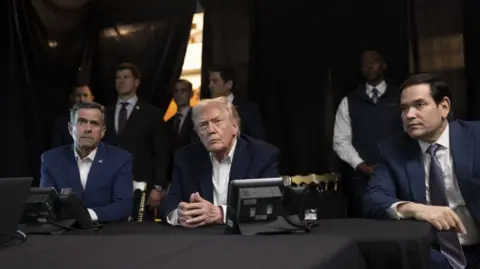
Operation Absolute Resolve: How the US Captured Maduro
In a dramatic military operation, US forces executed a covert raid to apprehend Venezuelan President Nicolás Maduro, signaling a high-stakes international confrontation in Latin America.
US forces conducted an elaborate military operation named Operation Absolute Resolve to capture Venezuelan President Nicolás Maduro, following months of extensive surveillance and strategic planning. The raid culminated in early December and involved a surprise attack that utilized air, land, and sea capabilities, drawing attention from global onlookers and condemnation from regional leaders.