India's parliament has made headlines by passing a contentious bill attempting to redefine the legal recognition of transgender individuals. This move has sparked protests nationwide, particularly from opposition parties and the LGBTQ community. While the government promotes the bill as a way to enhance accessibility to welfare benefits and tackle exploitation, critics argue it could inadvertently exclude many, especially those who identify as non-binary or gender-fluid. With an estimated two million transgender individuals in India, activists claim the bill undermines a previously affirmed right to self-identification from a Supreme Court ruling in 2014. The legislation limits recognition based on biological traits, thus requiring medical certification before gender-affirming surgeries—prompting concern over privacy and autonomy. Prominent figures, including Congressman Rahul Gandhi, criticize it as a significant infringement on rights, calling for broader discussions before its final assent from the president. The resurgence of protests underscores a persistent struggle for transgender rights in India, showcasing the challenges faced amid proposed regulatory changes.
Protests Erupt Over India's New Transgender Rights Bill
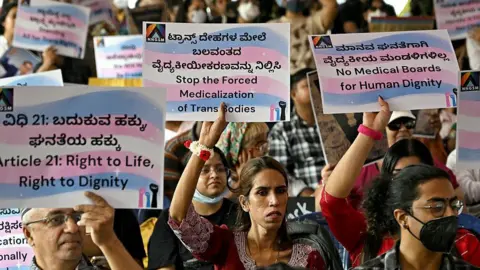
Protests Erupt Over India's New Transgender Rights Bill
A controversial amendment to India's transgender rights has ignited widespread protests, as critics warn it limits self-identification and could exclude many individuals.
India's parliament recently passed a bill that modifies how transgender people are recognized and the right to self-identify. The changes aim to improve access to welfare benefits but have led to protests against perceived exclusions of non-binary and gender-fluid individuals. Activists fear the new definition of transgender limits their rights and dignity, prompting calls for the bill's withdrawal.