In brief
The province of Quebec is extending its secularism laws through a new bill that limits public prayer and the display of religious symbols in public institutions, including daycares. Dubbed 'secularism 2.0,' these measures are contentious and have sparked significant debate, leading up to a Supreme Court challenge next year.
The Canadian province of Quebec plans to impose restrictions on public prayer and limit the exclusive offering of religion-based menus, like kosher and halal meals, in public institutions.
The latest efforts to strengthen state secularism, dubbed secularism 2.0, are part of a new bill introduced by the governing Coalition Avenir Quebec (CAQ) on Thursday, expanding on a 2019 religious symbols law that has fueled fierce debate throughout the country.
The original law prevents judges, police officers, teachers, and public servants from wearing symbols such as the kippah, turban, or hijab while at work.
Canada's Supreme Court will hear a legal challenge of that law early next year.
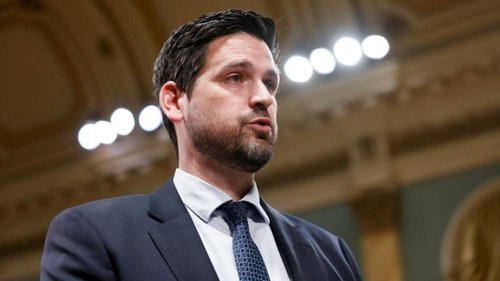
Jean-François Roberge, the minister responsible for secularism, stated the bill was part of an approach that respected individual as well as collective rights.
Measures proposed in Bill 9 would extend the ban on wearing religious symbols to staff in subsidized daycares, bar collective religious practices in public spaces without prior authorization, and prevent students from wearing face coverings in educational institutions.
These new limitations on public prayer arise from recent protests where groups were seen praying at pro-Palestinian demonstrations. Roberge condemned the use of public spaces for prayer, referring to instances where protesters blocked traffic.
The opposition has criticized the bill, claiming it creates division ahead of the provincial elections, while the National Council of Canadian Muslims accused the CAQ of politicizing identity issues as a means to regain public trust.
Since the original Bill 21 was passed six years prior, issues surrounding secularism have continued to be a point of contention in Quebec.