The Canadian province of Quebec plans to impose restrictions on public prayer and limit the exclusive offering of religion-based menus, like kosher and halal meals, in public institutions as part of its latest effort to strengthen state secularism.
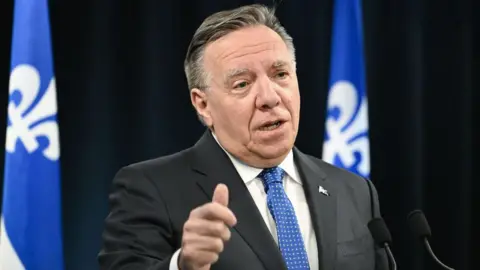
The secularism 2.0 changes are part of a new bill introduced by the governing Coalition Avenir Quebec on Thursday, which expands a 2019 religious symbols law that has fuelled fierce debate throughout the country.
The original law prevents judges, police officers, teachers and public servants from wearing symbols such as the kippah, turban, or hijab while at work.
Canada's Supreme Court will hear a legal challenge of that law early next year.
Jean-François Roberge, the minister responsible for secularism, said in French at a news conference on Thursday that the bill was part of an approach that respected individual as well as collective rights.
The measures proposed in Bill 9 would:
- extend the ban on wearing religious symbols to staff in subsidised daycares
- bar collective religious practices like prayer in public spaces, such as parks, without prior authorisation from municipalities
- prevent students and staff from wearing face coverings in daycare all the way through to post-secondary education
Roberge said the limits on public prayer were in reaction to recent protests in the province, where there has been debate over groups praying at pro-Palestinian demonstrations.
The decision to strengthen the law has already faced criticism from the opposition Parti Québecois, which accused the CAQ of creating division in an attempt to bolster support ahead of next year's provincial election.
Critics argue the law targets mostly religious minorities, particularly women of Muslim faith, and believe it creates further polarization within the community.
As the debate over secularism continues, the implications of these laws remain a hot topic in Quebec's cultural landscape.