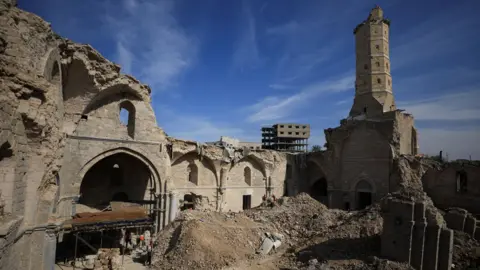
With pickaxes and wheelbarrows, dozens of Palestinian workers are concentrating their efforts on the Gaza Strip's historic structures, such as the medieval Great Omari Mosque. Following a US-brokered ceasefire, reminiscent of first aid work, this initiative aims to salvage Gaza's cultural heritage damaged in the ongoing conflict. Despite facing resource shortages and limited reconstruction materials, efforts led by local engineer Hosni al-Mazloum show a sheer determination to preserve vital elements of Palestinian identity.
In tandem with the restoration of structural integrity, conservationists are revisiting the recovered fragments of ancient manuscripts from the mosque’s library, facilitated by the British Council. Conservationist Hanin al-Amsi likened their efforts to first aid, emphasizing the need for immediate action to save historical texts trapped in destroyed areas. Remarkably, 148 out of 228 manuscripts have survived, thanks largely to pre-war preservation measures.
Meanwhile, as workers carefully unearth ruins from the Pasha’s Palace, the historical significance is growing clearer. Once a vibrant museum founded during the Mamluk era, its restoration remains hindered as essential materials are still in restricted supply. Local archaeologist Fadel el-Otol highlights the broader struggle to access numerous archaeological sites, exacerbated by current military controls.
While the challenges persist, the restoration work at these iconic sites ignites a spark of hope for both the preservation of heritage and community reconstruction in Gaza.
In tandem with the restoration of structural integrity, conservationists are revisiting the recovered fragments of ancient manuscripts from the mosque’s library, facilitated by the British Council. Conservationist Hanin al-Amsi likened their efforts to first aid, emphasizing the need for immediate action to save historical texts trapped in destroyed areas. Remarkably, 148 out of 228 manuscripts have survived, thanks largely to pre-war preservation measures.
Meanwhile, as workers carefully unearth ruins from the Pasha’s Palace, the historical significance is growing clearer. Once a vibrant museum founded during the Mamluk era, its restoration remains hindered as essential materials are still in restricted supply. Local archaeologist Fadel el-Otol highlights the broader struggle to access numerous archaeological sites, exacerbated by current military controls.
While the challenges persist, the restoration work at these iconic sites ignites a spark of hope for both the preservation of heritage and community reconstruction in Gaza.