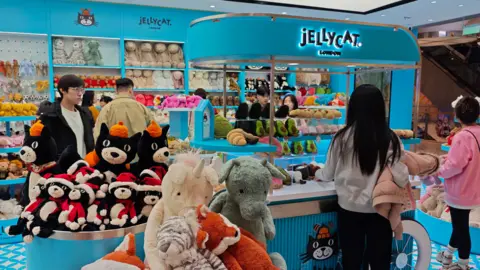
Jellycat, the UK-based plush toy brand, has seen a dramatic rise in popularity in China, particularly among young adults seeking comfort during tough times. Stella Huang discovered Jellycat during the pandemic and began her collection with a gingerbread house plushie, igniting a passion that has led to her owning 120 toys altogether.
The brand, which traditionally catered to children, tapped into the emotional needs of a disenchanted youth segment in China as they sought solace during uncertain times. The pandemic’s lockdowns made many turn to these soft companions for a sense of comfort and companionship.
Jellycat's unique offerings, like the popular Amuseables line, especially the aubergine plushie, have resonated with millennials and Gen-Z. Cultural trends and localization strategies helped Jellycat become a hit in China, featuring plushies themed around local favorites such as dim sum.
As sales of plush toys soar, the brand has become more than just a playful product; it has emerged as a light-hearted response to adult pressures, particularly in a slowing economy where securing financial stability has become increasingly challenging.
Despite achieving significant success, the future of Jellycat in the region may vary, as some fans speak of turning to other, more affordable collectible toys as the appeal grows more complex. Will the plush revolution continue in this new era of 'Kidults' seeking comfort amidst a changing economy?