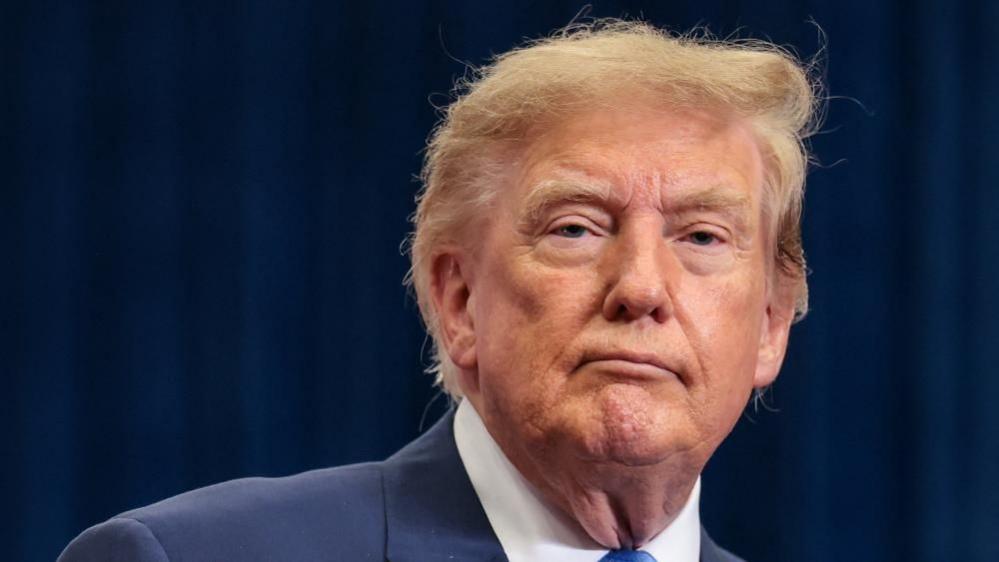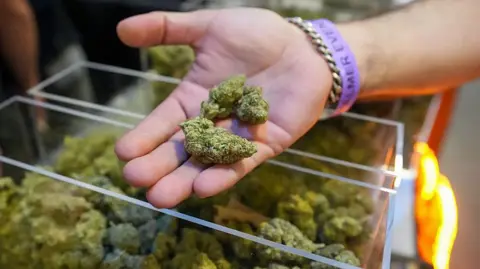
President Donald Trump has signed an executive order that will expand access to cannabis, a long anticipated move that would mark the most significant shift in US drug policy in decades.
The order directs the US attorney general to reclassify cannabis from a Schedule I narcotic to a Schedule III drug - placing it under the same category as Tylenol with codeine.
Cannabis will remain illegal at the federal level but classifying it as a Schedule III narcotic will allow expanded research into its potential benefits.
Several Republican lawmakers cautioned against the move, arguing it could normalize cannabis use.
The US Drug Enforcement Administration (DEA) states that Schedule III narcotics have a moderate to low potential for physical and psychological dependence.
During the signing ceremony, Trump stated that people have been begging for the change, particularly those in persistent pain from conditions like cancer and veterans with service-related injuries.
Alongside this order, Trump has tasked health officials with developing methods to analyze the real-world health benefits and risks associated with cannabidiol (CBD).
While cannabis use is allowed for medical purposes in many states, its federal classification as a Schedule I drug has hindered research and funding.
Advocates see this as a significant leap towards broader acceptance and utilization of cannabis in the healthcare industry, though some lawmakers remain skeptical.