In brief
On Sunday, former US President Donald Trump declared that Russia and Ukraine had agreed an energy ceasefire, sparking a flurry of reactions. Kyiv’s president called it “big news”, while Moscow has remained muted. Analysts say the move could benefit Russia by limiting Ukrainian strikes, but critics warn it may simply boost Trump’s fuel‑deal push. Meanwhile, Russian officials hint at continuing attacks on Ukraine’s energy sector, suggesting the ceasefire is one‑sided. The story underscores the shifting dynamics of the war’s energy front and the U.S. s bold intervention.
When former President Donald Trump tweeted that Russia and Ukraine had agreed an “energy ceasefire” last week, Moscow’s press corps stayed stone‑silent, while Kyiv’s president told reporters it was “big news.” The move has put the spotlight on the war’s most valuable resource: oil and gas.
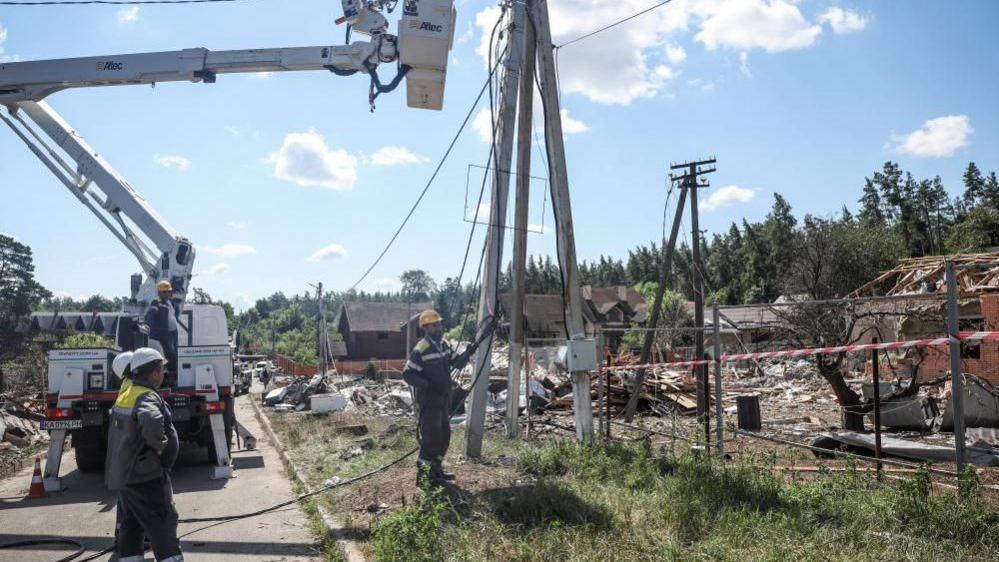
Energy workers work to restore power after a July strike.
According to Trump, the ceasefire is “effective immediately” and aims to stop attacks on energy infrastructure. Kyiv’s president Volodymyr Zelensky welcomed the pledge, calling it “news for me.” Moscow, however, has offered only vague remarks, with spokesman Dmitry Peskov saying “contacts are continuing” and that the country will speak if it has anything to add.
Pro‑Kremlin outlets have seized the moment, branding the announcement a “gift” for Moscow. They argue that as long as Russia can avoid destroying Ukraine’s last oil refinery, it can keep the ceasefire one‑way and keep the war going on its terms.
The reality is that Ukrainian drone strikes have already hit several Russian fuel sites, causing fuel shortages and pushing Moscow to keep up the pressure. Russian officials claim the ceasefire will hurt the Trump‑Putin diesel deal and the U.S. economy, while Trump insists it will lower fuel costs for American consumers—though critics warn the impact will be negligible.
Moscow’s silence and its continued energy attacks suggest the ceasefire is an arm‑chair bargaining chip rather than a genuine pause. Analysts say the next move will likely be dictated by how the U.S. responds to the fuel deal and whether Ukraine can maintain its energy grid against future strikes.