In brief
On August 10, 2026, President Trump announced a federal order urging a reduction in the number of mandatory childhood vaccines and a split administration of the measles‑mumps‑rubella (MMR) shot. He claims that earlier eras used far fewer shots, and that the current link between MMR and autism is unproven. The order is a conduct recommendation, not a legal change; states determine school vaccine requirements. Despite opposition from health experts, the administration could influence parents’ future vaccination schedules.
Trump signs order to limit childhood vaccines and split MMR shots.
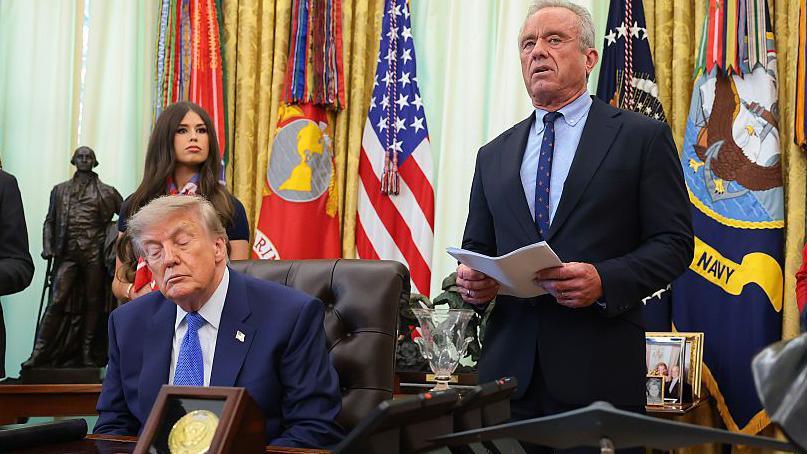
President Donald Trump signed an executive order on Monday that calls for fewer core childhood vaccines and recommends splitting the measles‑mumps‑rubella (MMR) shot across multiple visits. In a statement, he said, “Decades ago, children received only a small fraction of the vaccines required today … In those times, people were much healthier and the high rates of autism now observed did not exist.”
The order reflects the Trump administration’s longstanding claim that the MMR vaccine is linked to autism, a theory that has been repeatedly debunked by scientific studies. Trump’s statement notes that the federal government does not have authority to enforce these recommendations, as school‑attendance vaccine requirements are set at the state level.
The administration states that it is “recognising gold‑standard childhood vaccine recommendations for only 11 core vaccinations” against the most serious diseases, including measles, mumps, rubella, diphtheria, tetanus, pertussis, polio, Haemophilus influenzae type B, pneumococcal disease, human papillomavirus, and varicella. The goal is not just to reduce the number of shots, but also to spread them out over separate medical visits.
Health experts warn that the order could undermine herd immunity and potentially lead to increased outbreaks of vaccine‑preventable illnesses.