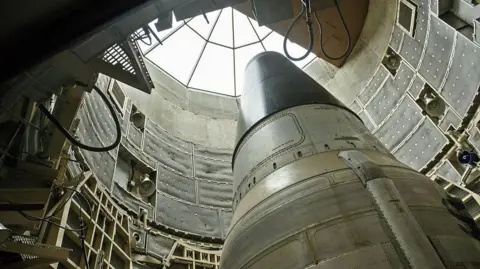
The last nuclear weapons control treaty between the US and Russia is due to expire on Thursday, raising fears of a new arms race. The Strategic Arms Reduction Treaty, known as 'New START' and signed in 2010, was one of a handful of agreements designed to help prevent a catastrophic nuclear war.
The treaty capped the number of deployed strategic nuclear warheads for each party to 1,550. It also established transparency through data transfer and on-site inspections.
Its expiry marks the end of arms control cooperation that helped conclude the Cold War. On the expiry, numerous experts, including Pope Leo, urged the renewal of the treaty, citing the current geopolitical tensions. This follows the collapse of other key treaties like the Intermediate-Range Nuclear Forces Agreement and the Open Skies Treaty.
Former military leaders warn that the frameworks keeping global security intact are at risk, as both the US and Russia expand their nuclear capabilities, raising the specter of an uncontrollable arms race. The global community now awaits the responses from both nations while grappling with the implications of their nuclear strategies.
The treaty capped the number of deployed strategic nuclear warheads for each party to 1,550. It also established transparency through data transfer and on-site inspections.
Its expiry marks the end of arms control cooperation that helped conclude the Cold War. On the expiry, numerous experts, including Pope Leo, urged the renewal of the treaty, citing the current geopolitical tensions. This follows the collapse of other key treaties like the Intermediate-Range Nuclear Forces Agreement and the Open Skies Treaty.
Former military leaders warn that the frameworks keeping global security intact are at risk, as both the US and Russia expand their nuclear capabilities, raising the specter of an uncontrollable arms race. The global community now awaits the responses from both nations while grappling with the implications of their nuclear strategies.