In brief
This presidential election promises a tense battle between liberal and conservative factions as Poland grapples with political fatigue.
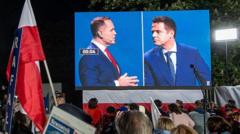
As Polish voters head to the polls this Sunday, they prepare for a tight race that could lead to a runoff between two major candidates: Warsaw's liberal mayor, Rafal Trzaskowski, and historian Karol Nawrocki from the national-conservative Law and Justice (PiS) party. Current polls indicate a high likelihood of a second round taking place in June, reflecting widespread voter discontent with the long-standing political status quo dominated by Tusk's civic coalition and PiS. Trzaskowski, a member of the center-right Civic Platform (PO), leads the polls, while Nawrocki trails slightly behind with only 4-6% separating them. The stakes are significant; the president has veto power over government legislation, and current President Andrzej Duda is ineligible to run again after two consecutive terms. Observers view Tusk's recent election as a crucial moment for liberal democracy, following years of rule by the right-leaning PiS government, which has faced accusations of authoritarianism and media manipulation. Despite becoming the prime minister, Tusk's coalition faces criticism for its failure to deliver on reform promises such as abortion rights and immigration policies. Voters express frustration over limited choices, feeling caught between “populist” options from both ends of the spectrum. Issues like LGBTQ+ rights and women's rights have been marginalized, intensifying calls for a shift in political priorities. The race highlights internal divisions within Tusk’s coalition and Nawrocki's controversial political maneuvers, including recent allegations regarding a questionable property deal. Although not affecting his polling standings much, these controversies illustrate the tense atmosphere as voters seek a leader who can unite rather than divide. With 13 candidates total, many voters remain undecided, yearning for a candidate who can move beyond the entrenched dominance of two major parties and foster meaningful dialogue across societal divides. The outcome of this election not only determines the future of Polish leadership but also reflects broader concerns about democracy and civic engagement in the country, making it a pivotal moment for Poland.