In brief
A massive Mayan city called Valeriana has been uncovered in Mexico's jungle, showcasing remarkable structures and reshaping our understanding of ancient cultures.
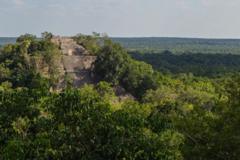
Archaeologists have stumbled upon an enormous Mayan city that vanished under thick jungle in Mexico centuries ago. Located in Campeche, the city, dubbed Valeriana, features pyramids, sports fields, and causeways, all revealed through innovative Lidar technology. Lidar, a radar survey method, allows scientists to map hidden structures beneath the forest canopy.The archaeological find occurred when Luke Auld-Thomas, a PhD student at Tulane University, accidentally discovered Lidar data online. Processing this data revealed an ancient city that once hosted 30,000 to 50,000 inhabitants around 750 to 850 AD—more than the current population of the area! Valeriana stands as one of the largest Mayan sites, second only to Calakmul.Named after a nearby lagoon, the discovery challenges the outdated notion that tropical regions were sites of decline for civilizations. Professor Marcello Canuto emphasizes that these areas are rich in complex cultures. While the reason for Valeriana's eventual decline isn't entirely clear, climate change is suggested to be a significant factor.The city's ruins, encompassing 16.6 square kilometers, included plazas, temple pyramids, and even a ball court. Excitingly, Lidar technology is revolutionizing archaeology, revealing countless potential sites hidden beneath the jungle. With so many discoveries on the horizon, researchers like Auld-Thomas believe they may uncover even more lost Mayan cities in the future!