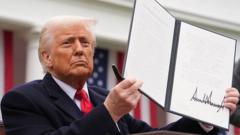
Japan is becoming a key player in President Trump's trade strategy, as negotiations finally lead to a deal. Initially elusive, the agreement signifies a potential shift in the global trading landscape. The U.S. is set to impose a 15% tariff on Japanese goods, higher than the UK's 10%, although the UK does not have a trade surplus.
The negotiations showcased Japan's tough stance, particularly from its finance minister, who referenced the country's $1.1 trillion in U.S. Treasury bonds as leverage. Speculation about Japanese hedge funds selling U.S. bonds amidst Trump's tariffs created wider concerns about the dollar's safe-haven status.
Now, with this agreement, Japan gains a foothold while deterring unified retaliation from economic allies like the EU. Though protective of its agricultural imports, Japan will import more U.S. rice. Efforts to change perceptions of American cars remain challenging.
The timing is strategic; Japan chose to engage rather than wait for the effects of upcoming tariffs due in August. Japan may also be motivated by domestic political dynamics. Meanwhile, U.S. tariffs have generated significant revenue—over $100 billion this year—accounting for 5% of the federal revenue, compared to the usual 2%.
However, questions arise about who bears the cost of these tariffs. U.S. consumers are likely to feel the pinch as prices rise for imported goods, compounded by a 10% drop in the dollar's value earlier this year, which increases import costs.
The broader implications reveal market trends where confidence in the dollar is waning. Analysts suggest this strategy could bolster competitiveness for American manufacturers, but it simultaneously aids China's position as a stable trading partner. Ultimately, Japan's deal is a notable victory for the Trump administration, but the long-term economic outlook remains uncertain.
The negotiations showcased Japan's tough stance, particularly from its finance minister, who referenced the country's $1.1 trillion in U.S. Treasury bonds as leverage. Speculation about Japanese hedge funds selling U.S. bonds amidst Trump's tariffs created wider concerns about the dollar's safe-haven status.
Now, with this agreement, Japan gains a foothold while deterring unified retaliation from economic allies like the EU. Though protective of its agricultural imports, Japan will import more U.S. rice. Efforts to change perceptions of American cars remain challenging.
The timing is strategic; Japan chose to engage rather than wait for the effects of upcoming tariffs due in August. Japan may also be motivated by domestic political dynamics. Meanwhile, U.S. tariffs have generated significant revenue—over $100 billion this year—accounting for 5% of the federal revenue, compared to the usual 2%.
However, questions arise about who bears the cost of these tariffs. U.S. consumers are likely to feel the pinch as prices rise for imported goods, compounded by a 10% drop in the dollar's value earlier this year, which increases import costs.
The broader implications reveal market trends where confidence in the dollar is waning. Analysts suggest this strategy could bolster competitiveness for American manufacturers, but it simultaneously aids China's position as a stable trading partner. Ultimately, Japan's deal is a notable victory for the Trump administration, but the long-term economic outlook remains uncertain.