In brief
China's Chang'e 5 mission has made waves as its precious moon dust landed in the UK for detailed research, marking a significant milestone in space exploration and collaboration.
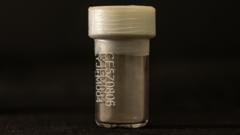
The UK's first lunar samples in nearly half a century have just arrived on a special loan from China. This remarkable delivery of moon dust, described by Professor Mahesh Anand, the sole British scientist with access to the samples, as "more precious than gold," is securely stored in a high-tech facility in Milton Keynes. China successfully collected these moon rocks during its Chang'e 5 mission in 2020, drilling into the volcanic grounds of Mons Rümker and retrieving about 2 kilograms of material. The samples, never before shared globally, represent a giant leap forward in scientific research, allowing scientists to unravel secrets about how the Moon formed and its connection to Earth.With the help of advanced technology, Professor Anand and his team plan to meticulously analyze the moon dust, exploring theories including the collision of early Earth with a Mars-sized planet. The arrival in the UK also highlights China's growing leadership in space, with Anand noting how there's much to learn from collaborating with their scientific initiatives.Professor Anand collected these samples in a meticulous ceremony in Beijing, showcasing the collaborative spirit of global science. Upon returning to his lab, strict protocols ensure that no Earthly contamination occurs, keeping the lunar material in pristine condition for study.As the research kicks off, technicians like Kay Knight express both excitement and nervousness at the rarity of their task—working with such a limited amount of irreplaceable cosmic material. The next step involves advanced machinery capable of heating and analyzing the dust, revealing its constituents under extreme conditions.Anand’s team has a year to innovate and experiment with these lunar pearls before they're inevitably consumed in the quest for knowledge. Meanwhile, China plans to continue its space missions, with fresh samples from the Moon's far side anticipated to offer even more profound insights. Professor Anand hopes this will usher in a new era of collaboration between international researchers, echoing the traditions established by the Apollo missions from decades prior.