
In brief
Indian artists have transformed the representation of Christ's birth, blending local styles with Western influences to create unique interpretations.
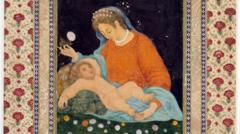
Throughout history, the nativity scene—the birth of Jesus Christ—has predominantly been portrayed by Western artists, often shaping the global perception of this significant event. However, Indian artists have found ways to express their interpretations infused with local culture and motifs, bridging Christianity with indigenous elements. In the 17th century, Mughal emperor Akbar welcomed Jesuit missionaries, who introduced European Christian art to India, influencing local court painters. These artists began merging Islamic styles with traditional nativity scenes. Historian Neha Vermani notes that one painting featuring Muhammad Jahangir at the nativity illustrates the Mughal rulers’ ideals of harmony and universal rule, allowing coexistence of diverse religions. Transitioning to the 20th century, Jamini Roy, born in West Bengal, infused Bengali folk art into his works, presenting Christ as relatable to Santhal figures, while maintaining a modernist flair. His artworks celebrate both Christian and Hindu traditions in a unique visual language.Another trailblazer, Angelo de Fonseca from Goa, challenged conventional depictions by portraying Mary as a local woman adorned in traditional attire, thus making biblical narratives resonate more with Indian audiences. By melding local cultural elements and Western art influences, these artists have shaped a new artistic narrative around Christianity that honors their heritage and diversifies the understanding of Christ's birth across the globe.