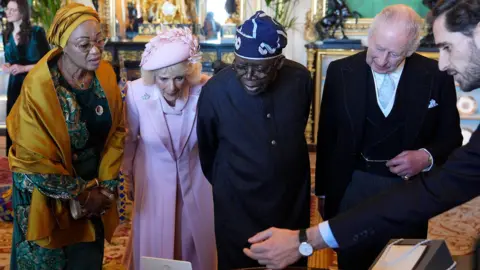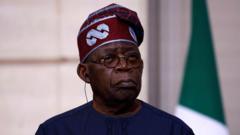
In Nigerian politics, maintaining a careful balance among the country's diverse ethnic groups has always been vital for stability. However, recent actions by President Bola Tinubu are stirring up concerns that this balance may be unraveling. Traditionally, federal appointments consider Nigeria's rich tapestry of over 250 ethnicities and two major religions—Islam and Christianity. Yet, since his election two years ago, Tinubu’s appointments have increasingly been criticized for favoring members of his own Yoruba ethnic group.
While Nigeria's constitution mandates regional representation, the broader practice has historically aimed to promote national unity. Tinubu's critics, including some from his own political party, the All Progressives Congress, assert that his choices reflect a troubling trend of ethnic favoritism. For instance, when he selected a northern Muslim as his running mate in the last elections, it strayed from the traditional mixed Muslim-Christian ticket, raising eyebrows across the nation.
Key positions, such as the heads of the central bank and the police, all currently belong to Yorubas—marking the first time in Nigeria's history that such a concentration of appointments has occurred. This has ignited fierce debate among political analysts and historians about its implications for national unity and democracy. Experts warn that continued favoritism can diminish the feelings of inclusion among other ethnic groups, especially northern Nigerians who feel marginalized.
While Tinubu's administration maintains that appointments are made fairly and strategically, critics argue that the trend undermines the promise of inclusivity. Even within his ranks, senators, including prominent northern representatives, echo the public's concerns about the perceived neglect of diversity in cabinet roles, which contrasts sharply with the more balanced representations seen under previous administrations.
Political analysts suggest the key to Nigeria's future lies in transcending ethnic lines and appointing the most qualified individuals regardless of their background. Nonetheless, experts agree that a significant shift in leadership philosophy is necessary to heal the divides that threaten the nation’s stability. The ongoing debate highlights the delicate balancing act Nigeria must navigate to preserve its unity amid a complex web of ethnic identities.