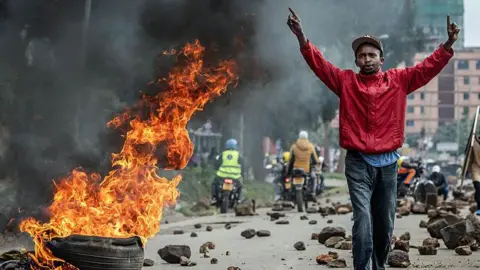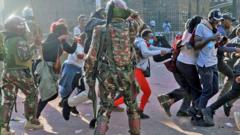
In the wake of a disturbing BBC Africa Eye documentary that highlighted the tragic deaths of three unarmed protesters during anti-tax demonstrations in Kenya last June, pressure is mounting on the government for accountability. The exposé featured security forces who allegedly opened fire on crowds outside parliament, leading to nationwide anger and renewed calls for investigations.
Amnesty International and the Kenya Human Rights Commission (KHRC) are demanding that the identified officers "face the law" for their actions. The Kenyan government, however, has claimed the documentary presents a "one-sided" view and criticized the media for not reflecting the complete context of events during the protests. Despite the government's insistence that investigations are underway, human rights groups continue to assert that police used excessive force, resulting in the deaths of 65 individuals.
The documentary sparked debates in Kenya's parliament, with some MPs accusing the BBC of pushing a foreign agenda. Others, like MP Millie Odhiambo, stressed that these issues should be addressed openly rather than suppressed. As the BBC canceled a planned screening in Nairobi amid governmental pressure, Amnesty International urged the public to sign petitions for an independent inquiry into the killings.
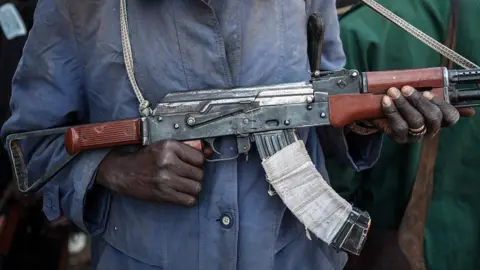
The Independent Policing Oversight Authority (IPOA) has reported ongoing investigations, revealing that 41 out of 60 deaths involved gunshot wounds. Yet, no officers have been charged. Amid rising tensions, voices within Kenya are calling for transparency and justice for victims of state violence, highlighting the demanding role of media in amplifying their struggles.
Amnesty International and the Kenya Human Rights Commission (KHRC) are demanding that the identified officers "face the law" for their actions. The Kenyan government, however, has claimed the documentary presents a "one-sided" view and criticized the media for not reflecting the complete context of events during the protests. Despite the government's insistence that investigations are underway, human rights groups continue to assert that police used excessive force, resulting in the deaths of 65 individuals.
The documentary sparked debates in Kenya's parliament, with some MPs accusing the BBC of pushing a foreign agenda. Others, like MP Millie Odhiambo, stressed that these issues should be addressed openly rather than suppressed. As the BBC canceled a planned screening in Nairobi amid governmental pressure, Amnesty International urged the public to sign petitions for an independent inquiry into the killings.
The Independent Policing Oversight Authority (IPOA) has reported ongoing investigations, revealing that 41 out of 60 deaths involved gunshot wounds. Yet, no officers have been charged. Amid rising tensions, voices within Kenya are calling for transparency and justice for victims of state violence, highlighting the demanding role of media in amplifying their struggles.