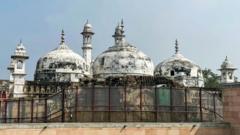
India is currently witnessing a significant legal battle over its Places of Worship Act of 1991, which aims to maintain the religious identity of worship sites as they stood at India's independence in 1947. This law, a response to escalating religious tensions and violence, prohibits altering places of worship and prevents court disputes except for the historically contentious Babri Masjid case.
The Babri Masjid, demolished in 1992, escalated religious strife and brought to light the fragile balance between India's secular and religious identities. Recently, court disputes, particularly involving mosques like the Gyanvapi, have reignited debates over the Act, with Hindu groups claiming ownership over sites alleged to have been temples.
Supporters of the law argue it protects religious minorities in a predominantly Hindu country, while challengers claim it obstructs religious freedom and ignores historical evidence. A Supreme Court ruling on this matter could significantly influence the treatment of contested religious sites and the broader socio-religious landscape in India.
On Thursday, the Supreme Court halted new court cases regarding religious ownership and surveys, keeping the peace for now as tensions simmer. The law's critical examination is expected to resume in February, as many await a resolution that navigates this complex and often volatile intersection of history, faith, and law.