---
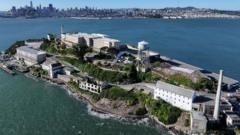
In a bold move, President Trump has reignited interest in Alcatraz, the infamous prison island that once housed some of America's most notorious criminals. Known as "the Rock," Alcatraz has been a popular tourist destination since its closure in 1963, attracting over 1.4 million visitors a year. Trump envisions it as a fortress for dangerous offenders, embodying his vision of law and order in America. However, experts argue that reviving this decaying structure is far from realistic.
Originally a military fort, Alcatraz became a federal penitentiary in 1934, housing infamous figures such as Al Capone. Its closure was largely due to soaring operational costs—it was three times more expensive to run than other federal prisons. Trump’s recent comments, made through a post on Truth Social, suggest a strong commitment to restoring Alcatraz, even as he acknowledged its current "rusting and rotting" state.
In support of Trump's vision, officials from his administration have suggested that reopening Alcatraz could be a way to handle serious public safety threats. Yet, prison experts highlight overwhelming challenges, from dilapidated infrastructure to logistical nightmares like water and sewage management. The cost of such renovations is another concern; it could exceed $500 per inmate, far surpassing current federal prison costs.
Despite Trump’s ambitions, historians like Hugh Hurwitz and John Martini caution against the plan, emphasizing that the famed prison is essentially a crumbling shell and not suited for contemporary corrections. With its legacy of glamour and despair, Alcatraz certainly captivates many, but its potential future remains highly uncertain.
In a bold move, President Trump has reignited interest in Alcatraz, the infamous prison island that once housed some of America's most notorious criminals. Known as "the Rock," Alcatraz has been a popular tourist destination since its closure in 1963, attracting over 1.4 million visitors a year. Trump envisions it as a fortress for dangerous offenders, embodying his vision of law and order in America. However, experts argue that reviving this decaying structure is far from realistic.
Originally a military fort, Alcatraz became a federal penitentiary in 1934, housing infamous figures such as Al Capone. Its closure was largely due to soaring operational costs—it was three times more expensive to run than other federal prisons. Trump’s recent comments, made through a post on Truth Social, suggest a strong commitment to restoring Alcatraz, even as he acknowledged its current "rusting and rotting" state.
In support of Trump's vision, officials from his administration have suggested that reopening Alcatraz could be a way to handle serious public safety threats. Yet, prison experts highlight overwhelming challenges, from dilapidated infrastructure to logistical nightmares like water and sewage management. The cost of such renovations is another concern; it could exceed $500 per inmate, far surpassing current federal prison costs.
Despite Trump’s ambitions, historians like Hugh Hurwitz and John Martini caution against the plan, emphasizing that the famed prison is essentially a crumbling shell and not suited for contemporary corrections. With its legacy of glamour and despair, Alcatraz certainly captivates many, but its potential future remains highly uncertain.