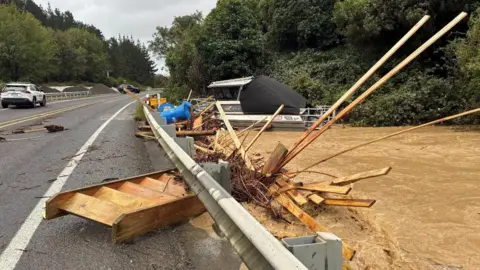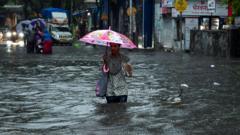
Heavy rainfall recently struck Mumbai, causing severe flooding and stranded residents, provoking public outrage. This disaster raised questions regarding the responsibility for the city's crumbling infrastructure. Roads transformed into rivers as low-lying areas became submerged, illustrating the vulnerability of urban settings during monsoon season. The Brihanmumbai Municipal Corporation (BMC), in charge of the city's infrastructure, faced criticism for initially blaming litter and construction debris for the flooding. They later deployed dewatering pumps and cleared drain obstructions, but many felt solutions came too late.
This flooding crisis is not confined to Mumbai; major cities across India face similar challenges during the monsoon, which delivers approximately 80% of the nation’s annual rainfall from June to September. Urban experts link the flooding to unplanned urban growth, where outdated drainage systems fail to accommodate the increasing population and construction. Environmental neglect has additionally eroded natural drainage systems such as wetlands.
Delhi, for example, often witnesses chaos around the notorious Minto bridge, a recurring symbol of urban flooding. This year saw its wettest May since 1901, resulting in property damage and loss of life. Meanwhile, Bengaluru, once celebrated for its lakes that managed excess rainfall, has seen these bodies of water replaced with construction, exacerbating the flooding problem.
Urban planning negligence has worsened the situation across all cities. Flood-prone areas now have constructions built on or around natural drainage channels that should manage rainwater flow. According to experts, combating future flooding requires innovative solutions, including the use of technology for real-time monitoring, but must also involve responsive governance and active community participation.
In summary, to lessen the impacts of monsoon rains, India must shift its approach, prioritizing sustainable planning and infrastructure resilience over quick fixes.
This flooding crisis is not confined to Mumbai; major cities across India face similar challenges during the monsoon, which delivers approximately 80% of the nation’s annual rainfall from June to September. Urban experts link the flooding to unplanned urban growth, where outdated drainage systems fail to accommodate the increasing population and construction. Environmental neglect has additionally eroded natural drainage systems such as wetlands.
Delhi, for example, often witnesses chaos around the notorious Minto bridge, a recurring symbol of urban flooding. This year saw its wettest May since 1901, resulting in property damage and loss of life. Meanwhile, Bengaluru, once celebrated for its lakes that managed excess rainfall, has seen these bodies of water replaced with construction, exacerbating the flooding problem.
Urban planning negligence has worsened the situation across all cities. Flood-prone areas now have constructions built on or around natural drainage channels that should manage rainwater flow. According to experts, combating future flooding requires innovative solutions, including the use of technology for real-time monitoring, but must also involve responsive governance and active community participation.
In summary, to lessen the impacts of monsoon rains, India must shift its approach, prioritizing sustainable planning and infrastructure resilience over quick fixes.