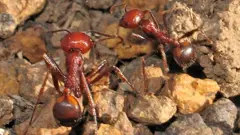
The ants are flying in Kenya at the moment. During this rainy season, swarms can be seen leaving the thousands of anthills in and around Gilgil, a quiet agricultural town in Kenya's Rift Valley that has emerged as the centre of a booming illegal trade. The mating ritual sees winged males leave the nest to impregnate queens, which also take flight at this time. This makes it the perfect time to chase down queen ants to sell to smugglers at the heart of a growing global black market.
Giant African harvester ant queens, known for their striking red color, have become particularly prized—each fetching as much as $220 online. These queens can create entire colonies and live for decades, making them highly sought after by pet enthusiasts.
Despite the illegal nature of this trade, commerce has continued largely unnoticed, catching scientists and authorities by surprise. A 2023 investigation revealed over 58,000 ant colonies were sold online, predominantly from East Africa to collectors worldwide. Conservationists are becoming alarmed over the ecological impact of this trade as these ants play crucial roles in their ecosystems.
With calls to improve monitoring and surveillance of the trafficking, experts point out that ants are biological assets that could bolster Kenya's economy through sustainable farming practices. Yet, navigating the balance between conservation and commerce remains a challenge as the debate over exporting ants continues.
Giant African harvester ant queens, known for their striking red color, have become particularly prized—each fetching as much as $220 online. These queens can create entire colonies and live for decades, making them highly sought after by pet enthusiasts.
Despite the illegal nature of this trade, commerce has continued largely unnoticed, catching scientists and authorities by surprise. A 2023 investigation revealed over 58,000 ant colonies were sold online, predominantly from East Africa to collectors worldwide. Conservationists are becoming alarmed over the ecological impact of this trade as these ants play crucial roles in their ecosystems.
With calls to improve monitoring and surveillance of the trafficking, experts point out that ants are biological assets that could bolster Kenya's economy through sustainable farming practices. Yet, navigating the balance between conservation and commerce remains a challenge as the debate over exporting ants continues.