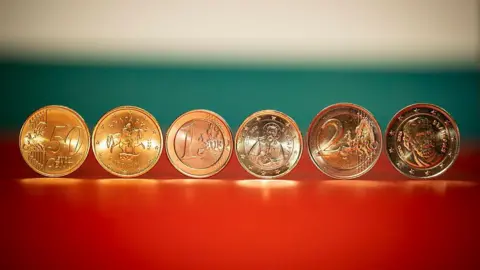
Bulgaria - the poorest country in the European Union - has become the 21st member of the eurozone, leapfrogging more obvious and prosperous candidates like Poland, the Czech Republic, and Hungary. For mostly urban, young, and entrepreneurial Bulgarians, it’s an optimistic and potentially lucrative leap, marking the final move in a game that has brought Bulgaria into the European mainstream from NATO and EU membership to joining the Schengen zone and now the euro.
For the older, rural, and more conservative parts of the population, the replacement of the Bulgarian lev by the euro provokes fear and resentment. The lev, meaning lion, has been the Bulgarian currency since 1881, but it has been pegged to other European currencies since 1997.
Opinion polls show that Bulgaria's 6.5 million population is nearly equally divided on the new currency, and ongoing political turmoil complicates the transition. Prime Minister Rosen Zhelyazkov's coalition government lost a confidence vote amid mass protests against the budget.
Some citizens are concerned about the euro's implications. Todor, a business owner, expresses doubt, believing that a majority of Bulgarians would vote against adopting the euro if given the chance. In contrast, others like Ognian, who owns a tea shop, view the euro as a technical change that could benefit trade.
As of August 2025, all shops in Bulgaria have displayed prices in both currencies, with plans to transition fully to the euro by February. Bulgaria hopes that engaging with the eurozone will stimulate trade and investment while addressing public concerns about maintaining national identity.
For the older, rural, and more conservative parts of the population, the replacement of the Bulgarian lev by the euro provokes fear and resentment. The lev, meaning lion, has been the Bulgarian currency since 1881, but it has been pegged to other European currencies since 1997.
Opinion polls show that Bulgaria's 6.5 million population is nearly equally divided on the new currency, and ongoing political turmoil complicates the transition. Prime Minister Rosen Zhelyazkov's coalition government lost a confidence vote amid mass protests against the budget.
Some citizens are concerned about the euro's implications. Todor, a business owner, expresses doubt, believing that a majority of Bulgarians would vote against adopting the euro if given the chance. In contrast, others like Ognian, who owns a tea shop, view the euro as a technical change that could benefit trade.
As of August 2025, all shops in Bulgaria have displayed prices in both currencies, with plans to transition fully to the euro by February. Bulgaria hopes that engaging with the eurozone will stimulate trade and investment while addressing public concerns about maintaining national identity.