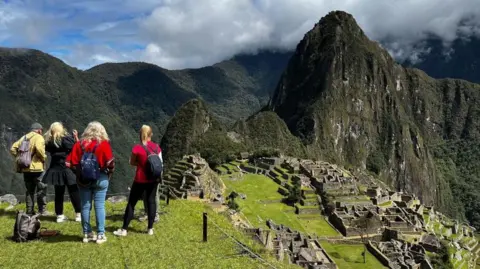
Machu Picchu, the remains of a 15th Century Inca city, is Peru's most popular tourist destination, and a UNESCO World Heritage site. Yet a continuing dispute over the buses that take visitors up to the mountain-top site recently saw some 1,400 stranded tourists needing to be evacuated.
Cristian Alberto Caballero Chacón is head of operations for bus company Consettur, which for the past 30 years has transported some 4,500 people every day to Machu Picchu from the local town of Aguas Calientes.
It is a 20-minute journey, and the only alternative is an arduous, steep, two-hour walk.
He admits that in the past few months there have been some conflicts between people from different communities here.
This conflict revolves around Consettur losing its license to a rival bus firm in this remote part of Peru, where, unless you want to hike over Andes mountains, the only access is by public transport.
To get to Machu Picchu without walking, tourists must first take a train to Aguas Calientes, which takes from two to three and a half hours. And then they must transfer to a bus for the final leg.
Back in September, local protestors angered that Consettur was being replaced following what they saw as an insufficiently open bidding process, blocked the railway line to Aguas Calientes with rocks. This resulted in Peruvian authorities having to clear the tracks and evacuate tourists on special train services.
Although Consettur's license ran out in September, it is continuing to run its buses. And due to legal challenges, San Antonio de Torontoy has yet to start. While the mayor of Aguas Calientes, Elvis La Torre, expresses concern that most ticket revenues do not remain local, community leaders call for a shared approach that includes all stakeholders in the tourism ecosystem and sees profits reinvested back into the community.