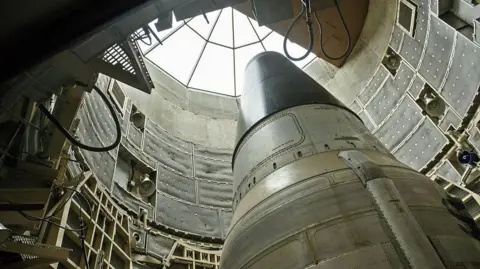
The last nuclear weapons control treaty between the US and Russia is due to expire on Thursday, raising fears of a new arms race. The Strategic Arms Reduction Treaty, known as 'New START', was signed in 2010 as an effort to prevent catastrophic nuclear war and capped the number of deployed strategic nuclear warheads for each party to 1,550.
Its expiration signals a potential end to arms control cooperation that has persisted since the Cold War, contributing to global stability. The treaty also established transparency measures through data transfers, notifications, and on-site inspections, aimed at fostering trust between the two nations.
With tensions having escalated since the onset of the Ukraine war, experts warn that the collapse of this treaty, alongside other vital arms control agreements, could lead to an increase in nuclear capabilities as both the US and Russia modernize their arsenals. Former military leaders caution that the world faces a more dangerous era where the absence of cooperative arms control frameworks may result in an unchecked arms race.
Calls for renewal have emerged, with notable voices including Pope Leo urging US and Russian leadership to take steps to avert a new arms race. As the geopolitical climate continues to shift, the future of nuclear arms control remains uncertain amidst rising competition, particularly regarding China's expanding nuclear capabilities. Experts highlight that this evolving landscape will likely complicate efforts to establish new treaties, as nuclear weapons are viewed as critical deterrents by more nations than ever before.
Its expiration signals a potential end to arms control cooperation that has persisted since the Cold War, contributing to global stability. The treaty also established transparency measures through data transfers, notifications, and on-site inspections, aimed at fostering trust between the two nations.
With tensions having escalated since the onset of the Ukraine war, experts warn that the collapse of this treaty, alongside other vital arms control agreements, could lead to an increase in nuclear capabilities as both the US and Russia modernize their arsenals. Former military leaders caution that the world faces a more dangerous era where the absence of cooperative arms control frameworks may result in an unchecked arms race.
Calls for renewal have emerged, with notable voices including Pope Leo urging US and Russian leadership to take steps to avert a new arms race. As the geopolitical climate continues to shift, the future of nuclear arms control remains uncertain amidst rising competition, particularly regarding China's expanding nuclear capabilities. Experts highlight that this evolving landscape will likely complicate efforts to establish new treaties, as nuclear weapons are viewed as critical deterrents by more nations than ever before.