In brief
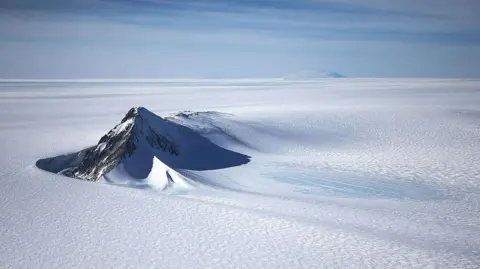
Researchers have created a detailed map of Antarctica's hidden landscape, showcasing thousands of previously undiscovered hills and ridges, which may be crucial for understanding climate change impacts and sea-level rise. The study combined satellite data and physics to unveil the continent's topography, likening the discovery to advancing from a grainy photo to a high-definition image. This new insight into Antarctica's 'underbelly' could reshape what we know about ice flow and climate science.
A new map has unmasked the landscape beneath Antarctica's ice in unprecedented detail, greatly enhancing our understanding of the frozen white continent. Utilizing satellite data, researchers discovered thousands of previously hidden hills and ridges, shedding light on the intricate mountain ranges lying beneath the ice. This detailed mapping could provide vital clues about Antarctica's response to climate change and its potential impact on global sea levels.Mapping Antarctica's subglacial landscape has proven challenging, with traditional methods often leaving gaps in data. However, this innovative approach integrates satellite insights with physical principles governing ice movement. Lead author Dr. Helen Ockenden notes this discovery is like transitioning from a grainy pixel image to a high-resolution photograph of Antarctica's 'underbelly'.The research uncovered a deep channel within the Maud Subglacial Basin, illustrating the complexity of the landscape. While uncertainties remain about the exact nature of these features, the advancements made in mapping will significantly improve our models predicting how Antarctica will react as the climate warms, which is crucial given the continent's potential to contribute to sea-level rise.