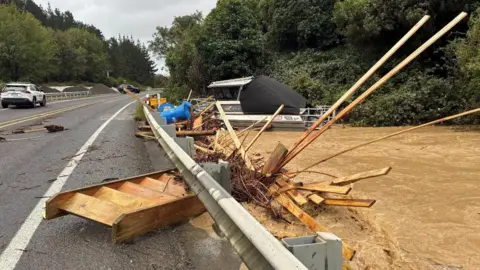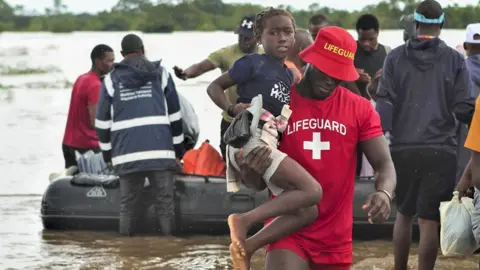
Mozambique is grappling with catastrophic flooding, deemed the worst in a generation, impacting tens of thousands of people. Victims are clinging to treetops, desperately awaiting assistance as floodwaters inundate their homes. The Inkomati River, which has burst its banks, has exacerbated the crisis, prompting rescue operations involving teams from Brazil, South Africa, and the UK.
For me, this is the first time I have experienced a calamity of this magnitude. Elders say a similar disaster took place in the 1990s, shares Tomaz Antonio Mlau, a local mechanic whose family had to abandon their home and seek refuge in a shelter. Many, like Mlau, were forced to leave behind everything and have found temporary housing in local schools and churches.
The need for safe accommodations and food has become increasingly urgent. Officials report over 642,000 people impacted by the flooding and a rising death toll of at least 12 as the waters continue to rise. Rescuers are working tirelessly, but some residents refuse to leave their property despite the risks.
Mayor Shafee Sidat expressed concern as more than 10,000 individuals in Marracuene alone are affected, with many still in need of rescue. The community is rallying for support, but fears of further heavy rain from South Africa loom large, potentially exacerbating the situation further. The consequences of this disaster are profound, as survivors face not only the loss of homes but their livelihoods as well, with reports of devastation to crops and livestock crucial to their survival.
As essential roadways remain submerged, basic goods and services are threatened across the region, making the need for immediate international aid critical.
For me, this is the first time I have experienced a calamity of this magnitude. Elders say a similar disaster took place in the 1990s, shares Tomaz Antonio Mlau, a local mechanic whose family had to abandon their home and seek refuge in a shelter. Many, like Mlau, were forced to leave behind everything and have found temporary housing in local schools and churches.
The need for safe accommodations and food has become increasingly urgent. Officials report over 642,000 people impacted by the flooding and a rising death toll of at least 12 as the waters continue to rise. Rescuers are working tirelessly, but some residents refuse to leave their property despite the risks.
Mayor Shafee Sidat expressed concern as more than 10,000 individuals in Marracuene alone are affected, with many still in need of rescue. The community is rallying for support, but fears of further heavy rain from South Africa loom large, potentially exacerbating the situation further. The consequences of this disaster are profound, as survivors face not only the loss of homes but their livelihoods as well, with reports of devastation to crops and livestock crucial to their survival.
As essential roadways remain submerged, basic goods and services are threatened across the region, making the need for immediate international aid critical.