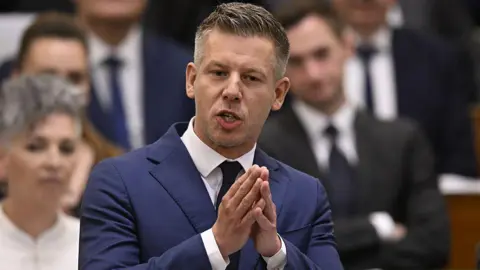
On the eve of Hungary's highly significant elections, the battle reaches its climax as Péter Magyar capitalizes on a growing wave of support aimed at ousting Viktor Orbán, the leader of the Fidesz party. At a recent rally, Magyar expressed confidence that a victory was within reach, urging his supporters to persist in their efforts.
While Magyar makes his final campaign stops in towns like Debrecen, Orbán, who is lagging in the polls, continues to address audiences in Budapest. Over the weekend, a massive anti-Fidesz concert drew tens of thousands to the streets, a reflection of the public's rising dissatisfaction.
Young voters, in particular, are emerging as a driving force for change, with many expressing a sense of urgency to rewrite their country’s future. As Magyar traverses the nation with a rigorous campaign schedule, the sentiment shared by first-time voters captures this moment: 'I feel it in my bones something's going to change.'
Political analysts note a significant shift among the youth vote, with many disillusioned by the long-standing Fidesz rule and looking towards new leadership. Magyar's grassroots movement, Tisza, not only inherits a following from disaffected Fidesz voters but also appeals to younger demographics eager for a political overhaul.
With the elections approaching, Hungary stands at a crossroads between the old guard and a vision for a new era, as the risks of complacency loom large for both candidates.
While Magyar makes his final campaign stops in towns like Debrecen, Orbán, who is lagging in the polls, continues to address audiences in Budapest. Over the weekend, a massive anti-Fidesz concert drew tens of thousands to the streets, a reflection of the public's rising dissatisfaction.
Young voters, in particular, are emerging as a driving force for change, with many expressing a sense of urgency to rewrite their country’s future. As Magyar traverses the nation with a rigorous campaign schedule, the sentiment shared by first-time voters captures this moment: 'I feel it in my bones something's going to change.'
Political analysts note a significant shift among the youth vote, with many disillusioned by the long-standing Fidesz rule and looking towards new leadership. Magyar's grassroots movement, Tisza, not only inherits a following from disaffected Fidesz voters but also appeals to younger demographics eager for a political overhaul.
With the elections approaching, Hungary stands at a crossroads between the old guard and a vision for a new era, as the risks of complacency loom large for both candidates.