In brief
As West Bengal gears up for assembly elections, candidates from the Bharatiya Janata Party (BJP) are incorporating fish into their campaign strategies as a powerful symbol of identity and culture. With fish being a staple of Bengali cuisine and a significant part of local life, politicians are wielding it not only to engage with voters but also to counter claims about their party’s dietary preferences. The use of fish highlights the tension between cultural identity and political messaging in this crucial electoral battle.
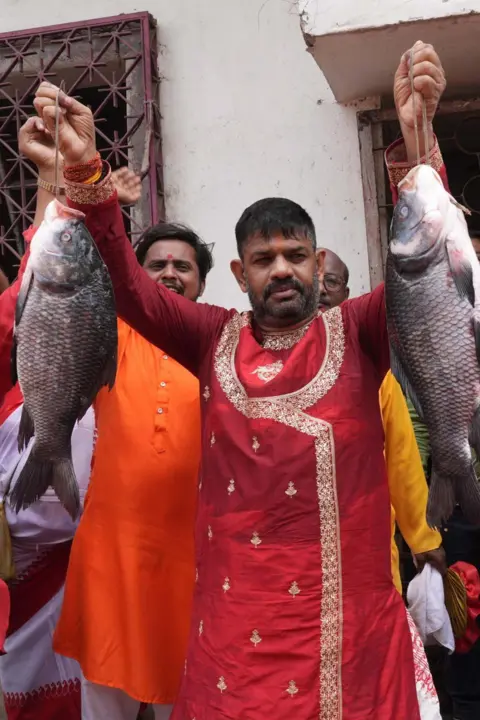
On a sticky morning in Kolkata's Barrackpore, BJP candidate Koustav Bagchi made his rounds sporting traditional attire and holding a fish, a symbol meant to resonate with local voters. Meanwhile, another BJP politician, Rakesh Singh, was seen hoisting a fish amid enthusiastic chants from supporters, aiming to highlight their connection with Bengali culture. Fish is not just food in Bengal; it signifies cultural identity and heritage, making it a potent campaign tool. The practice of showcasing fish during election campaigning serves a dual purpose: reinforcing the candidates' ties to the community and pushing back against perceptions of the BJP's vegetarian leanings. Chief Minister Mamata Banerjee of the Trinamool Congress responded to this theatrical display, emphasizing that fish and rice are integral to Bengal’s way of life. In a state where 65.7% of people consume fish weekly, its symbolic significance amplifies the ongoing rivalry. As both parties navigate this cultural landscape, the election not only highlights political strategies but also the deep-seated connections between food and identity in Bengali culture.