In brief
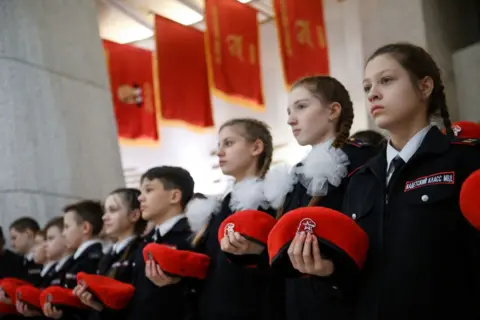
The Oscar-winning documentary 'Mr Nobody Against Putin' sheds light on the rising tide of state-sponsored patriotism in Russian schools. Parents struggle with the patriotic messages their kids receive, while children like Maksim enthusiastically engage in lessons describing war preparations. As teachers navigate government mandates, the documentary raises critical questions about the impact of propaganda on youth. Some families fear openly discussing dissent, complicating the balance between school activities and home values.
When her seven-year-old daughter was told to learn a poem about Russia's 'glorious army' for a school event, Nina from Moscow thought it was too much. She has struggled to shield her daughter from an ever-increasing number of 'patriotic' activities and lessons. That ramping up of war propaganda directed at Russian children has been brought to life before a global audience in an Oscar-winning documentary, 'Mr Nobody Against Putin.' The documentary, produced by the BBC, features footage captured by Pavel Talankin, a primary school events co-ordinator from Karabash in the Ural mountains. Parents like Nina worry that opposing school activities could socially isolate their children, who may enjoy the sense of belonging these government-backed initiatives present.Maksim, eight, recounted learning about great Russian poets and military strategies, exclaiming, 'They told us this is how to prepare for war.' While his mother Marina opposes the invasion of Ukraine, she carefully avoids discussing her views at home for fear that he might repeat them in public, illustrating how state propaganda seeps into the family fabric.The documentary reflects on how children are being molded by patriotic narratives, while many parents feel compelled to maintain a facade of acceptance to protect their kids socially. This combination of documented evidence and personal testimonies underscores the dissonance between school teachings and divergent home perspectives, highlighting the tug-of-war between state narratives and family values.