In brief
The 2026 U.S. Senate debates are a mix of political theatre and strategic silence. First, many Republican candidates are distancing themselves from Trump, breaking the long‑time “Trump‑tight” rule. Second, the arena is rife with personal jabs—especially in the Michigan race, where Muslim‑candidate Abdul El‑Sayed faced hostile commentary. Finally, 21 of 35 open Senate seats are going debate‑free, leaving voters without a chance to hear the candidates argue live. These moments highlight how the midterms are testing the boundaries of democracy and electric rhetoric.
The 2026 U.S. midterm Senate debates felt a lot like a reality‑TV showdown—except it’s real politics and the stakes are higher than any drama series.
1. Not every Republican is a Trump fan club. While the “Trump‑tight” mantra used to be a surefire win, a Reuters analysis this month found that about two‑thirds of party candidates in competitive races have publicly broken ties with the former president. Take Maine’s Susan Collins: she proudly stated she voted with President Biden 91% of the time — and she’s already out for a tighter Senate race against Democrat Troy Jackson.
2. Personal attacks are the new buzzwords. The Michigan race between Democrat Abdul El‑Sayed (former Senate leader) and Republican Mike Rogers has morphed into a verbal war of words. Rogers questioned whether any family member of El‑Sayed might be on a “watchlist,” to which El‑Sayed fired back, branding Rogers a “sock puppet” for Trump. In Georgia, a bruising back‑and‑forth saw Senator Jon Ossoff label Republican Mike Collins a “bigot” calling him a member of the “Third Reich.” These sparring contests are leaving voters with scattered headlines rather than policy debates.
3. 21 of 35 Senate seats are going debate‑free. ABC News discovered that more than a third of upcoming races have no debate schedule at all. Texas’s race between Democrat James Talarico and former Attorney General Ken Paxton is a prime example—Paxton has declined all debate invitations, leaving voters to decide without witnessing a live face‑to‑face. Experts warn that silence can be a strategic skip, giving the opponent the upper hand in setting the negative narrative.
All these head‑liners point to one thing: the 2026 midterms are shifting the political playbook. Whether it’s R‑v‑T breakup, personal jabs, or debate‑free canvasing, the outcomes will shape the next Senate’s composition and, by extension, the next presidential agenda.
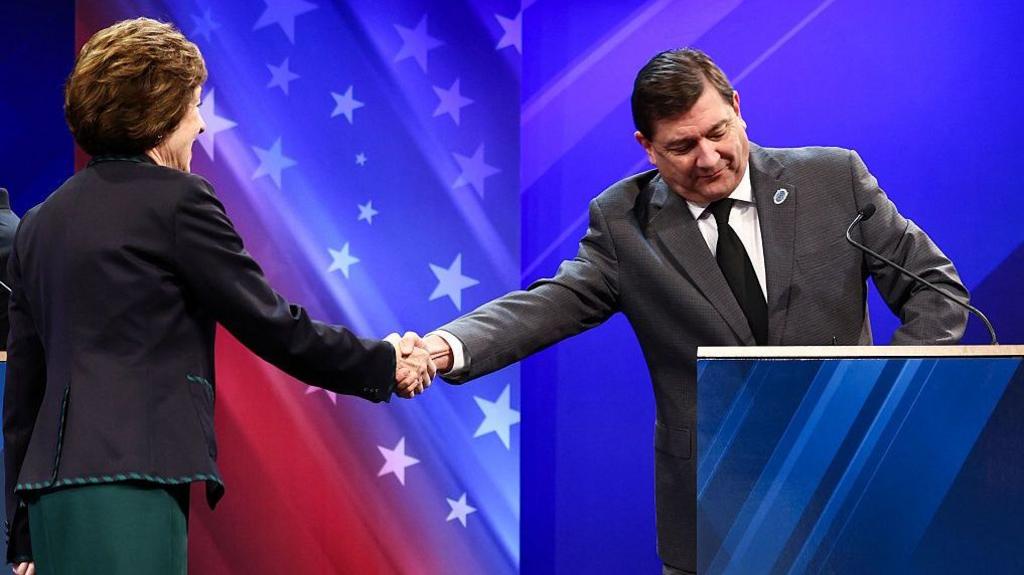
Visuals from the debate floor:
Kevin M. Collins and Troy Jackson in the Maine debate scene.

Turek versus Hinson in Iowa: policy, not personal attacks.

The Michigan showdown that ignited anti‑Muslim rhetoric and stinging comments.