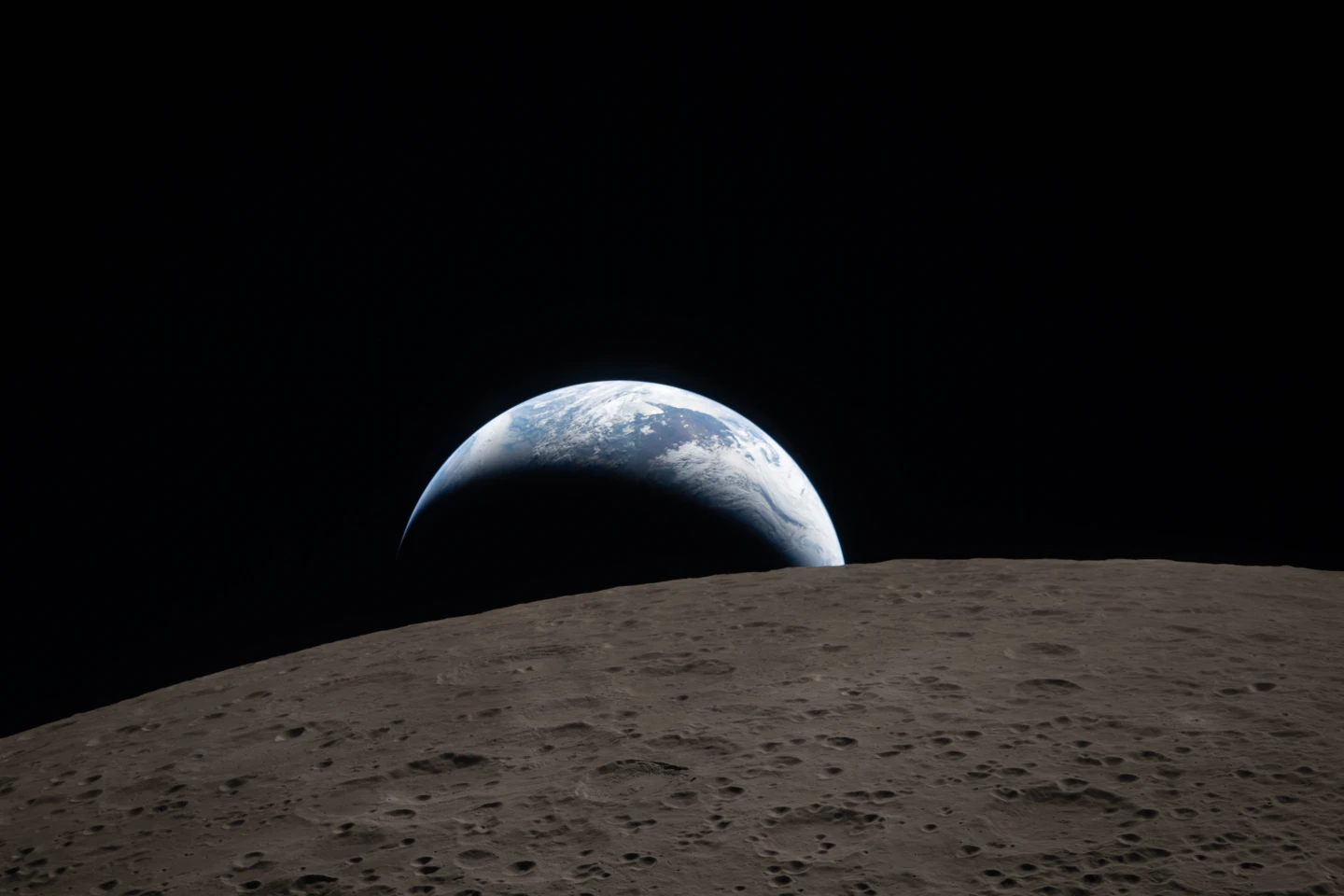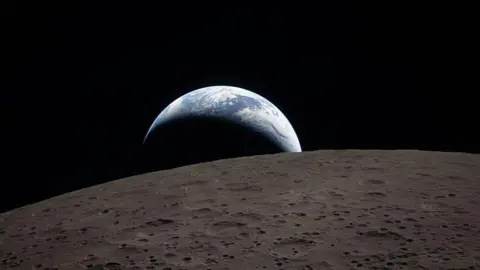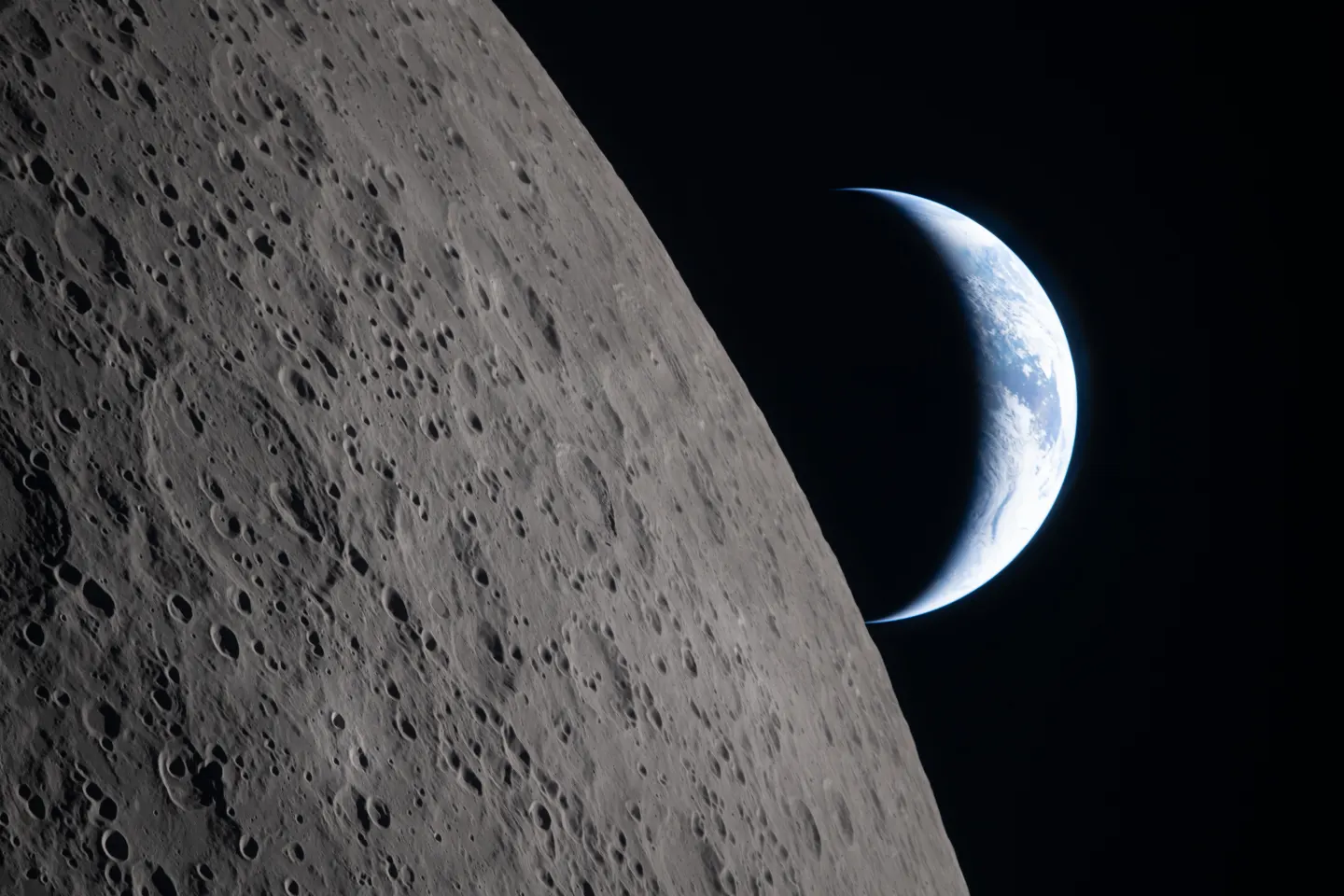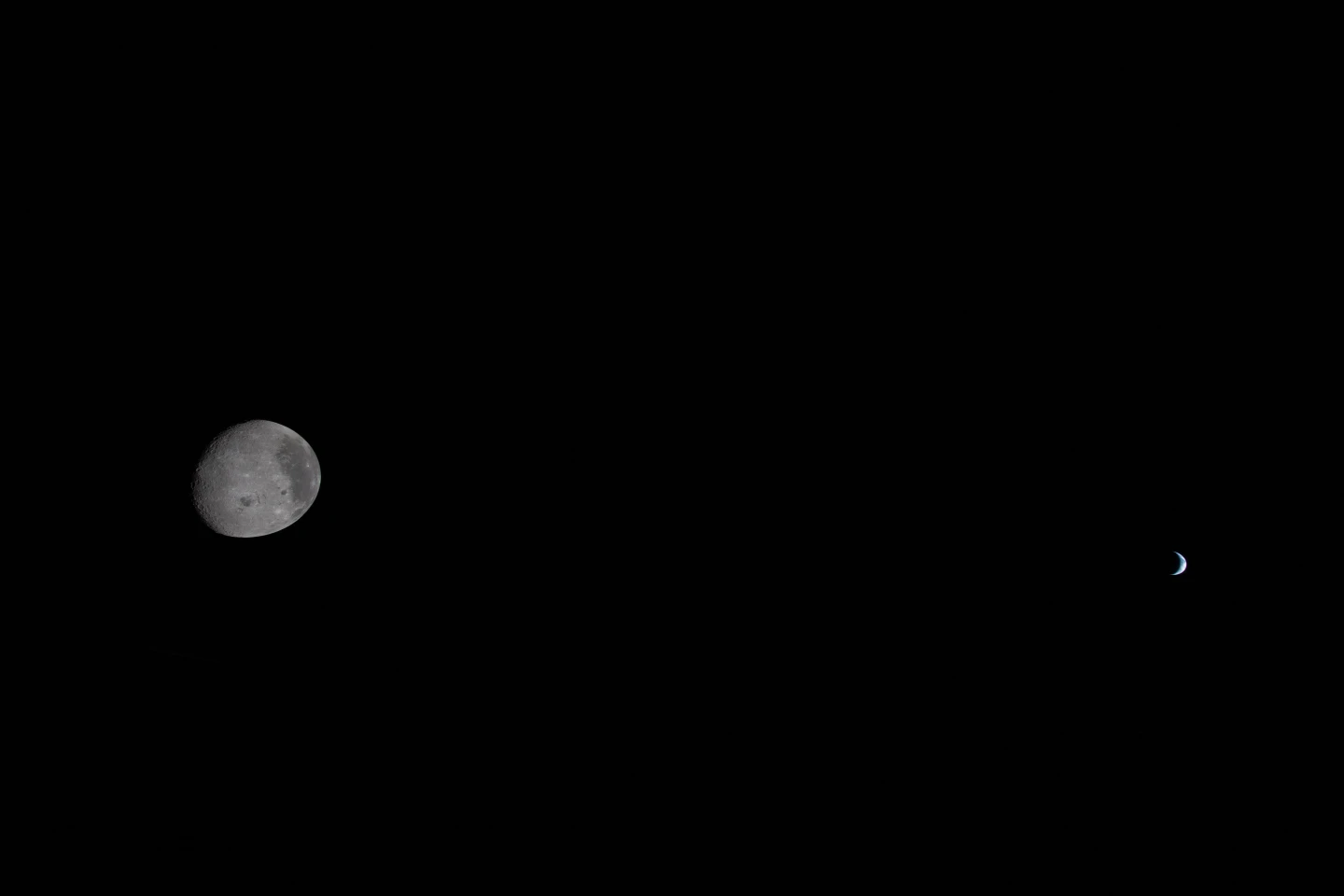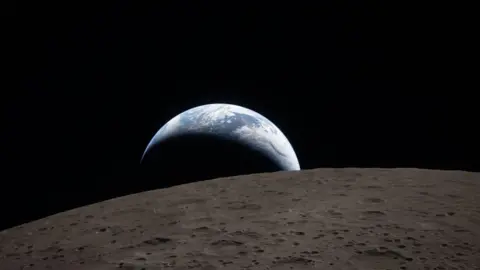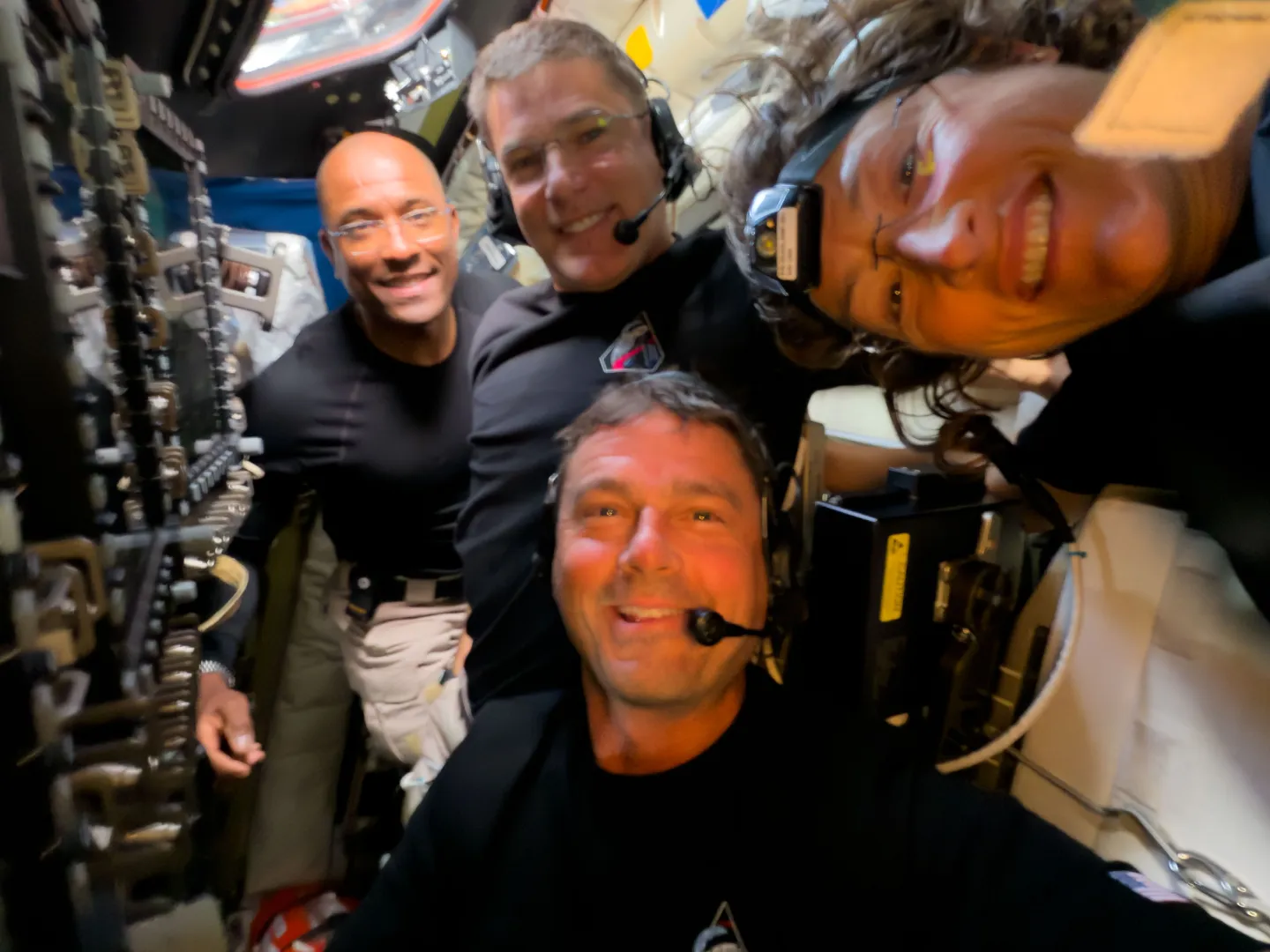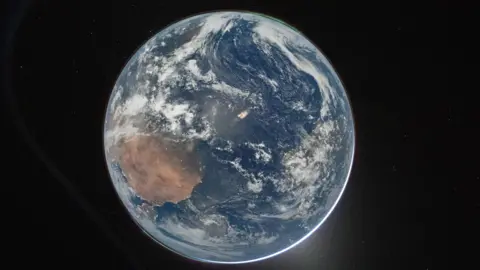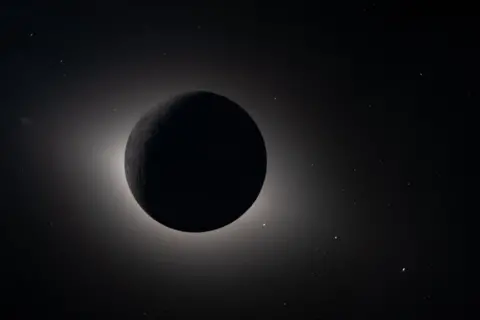
NASA has released the first photographs taken by the Artemis II astronauts during their fly-by of the Moon, revealing stunning visuals of our planet and cosmic events. The first image features an 'Earthset', capturing Earth peeking beyond a cratered lunar landscape, while the second photo showcases a spectacular solar eclipse as the Moon obscured the Sun. The astronauts had just returned from a six-hour flyby, which included moments of radio silence behind the Moon.
Notably, the Earthset photo echoes the famous 'Earthrise' photograph taken during Apollo 8 in 1968, remembered for its role in sparking environmental awareness. NASA described the captured moment as portraying a vibrant, vulnerable Earth, surrounded by the vastness of space.
The astronauts experienced a rare view of the solar eclipse, with some describing it as a 'sci-fi' moment. Victor Glover remarked on the surreal experience of seeing the Sun's corona during the eclipse and likened the bright Earth against the dark background of space to a scene from a science fiction movie.
NASA highlighted that the Earthrise photo was taken from the Orion spacecraft window on Monday evening, depicting a scene where nighttime Earth contrasts against swirling clouds over the Australia and Oceania region, with the Ohm crater prominently visible in the foreground.
Notably, the Earthset photo echoes the famous 'Earthrise' photograph taken during Apollo 8 in 1968, remembered for its role in sparking environmental awareness. NASA described the captured moment as portraying a vibrant, vulnerable Earth, surrounded by the vastness of space.
The astronauts experienced a rare view of the solar eclipse, with some describing it as a 'sci-fi' moment. Victor Glover remarked on the surreal experience of seeing the Sun's corona during the eclipse and likened the bright Earth against the dark background of space to a scene from a science fiction movie.
NASA highlighted that the Earthrise photo was taken from the Orion spacecraft window on Monday evening, depicting a scene where nighttime Earth contrasts against swirling clouds over the Australia and Oceania region, with the Ohm crater prominently visible in the foreground.