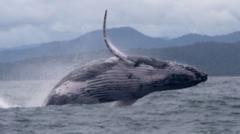
A humpback whale has stunned scientists with one of the longest migrations ever recorded. This remarkable journey began off the Pacific coast of Colombia in 2017 and ended near Zanzibar in the Indian Ocean, covering an astonishing distance of over 13,000 km. Experts believe that the migration could be a result of climate change impacting food supply or an adventurous search for a mate.
Ekaterina Kalashnikova, a researcher with the Tanzania Cetaceans Program, noted that this remarkable migration is "impressive and unusual,” even for a species already known for long travels. The same whale was photographed again off the coast of Zanzibar in 2022, and the journey is likely the longest ever recorded for a humpback.
Typically, humpback whales migrate from warmer tropical breeding areas to nutrient-rich colder waters, but this male's journey was unique, involving two far-flung breeding zones. Some theories suggest that shifting food availability due to climate change, or possibly the search for new breeding grounds as populations recover from conservation efforts, may explain this incredible trek.
While the precise reasons behind this migration are still unclear, factors could include climate change, environmental extremes, or evolutionary behavior of the species itself. The whale was first photographed in a group of humpbacks in Colombia in 2013 and recognized again in subsequent years.
Data for this research is drawn from citizen scientists contributing to happywhale.com, a platform that utilizes AI to track individuals by matching the unique patterns on their tails. This groundbreaking study has been published in Royal Society Open Science and sheds light on the astonishing capabilities of humpback whales and the challenges they face.