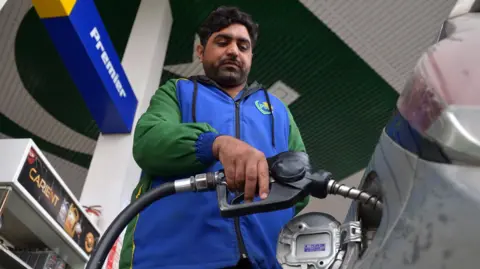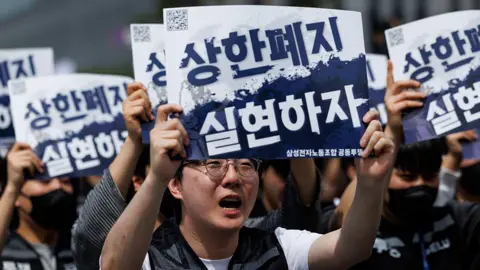
Hundreds of transport workers in the Philippines' capital Manila have gone on strike over rising fuel costs. Diesel and petrol prices have more than doubled since the Iran war broke out on 28 February, with the Philippines now in a state of national energy emergency. One 62-year-old driver in Manila told the BBC the situation was getting increasingly desperate, saying he had no food to support his five children and had not received any cash aid from the government.
As the two-day strike began, a ship carrying more than 700,000 barrels of Russian crude oil arrived in the country. President Ferdinand Marcos' spokeswoman reported that the Sierra Leone-flagged Sara Sky brought the crude shipment earlier this week. Marcos had promised to seek new oil sources as the country relies on supplies that pass through the Strait of Hormuz for 98% of its oil requirements.
The transport coalitions leading the strike have laid out sweeping demands, including scrapping fuel taxes, rolling back oil prices, and increasing wages. Protesters gathered across the capital, many of whom are jeepney drivers known for their affordable fares. Many expressed their disappointment at the government for not providing the promised cash aid of 5,000 pesos, which some had not received despite waiting in line for hours.
Amidst the strike, commuters have reported disruptions in one of Asia's most congested cities. Arnold Irinco, a commuter, shared his understanding of the driver's plight, emphasizing the importance of their livelihoods.
In another update, Marcos signed a law allowing a suspension or cut of the excise tax on petroleum when Dubai crude oil prices exceed $80 per barrel for a month. This declaration of a national state of energy emergency has raised concerns among labor groups, with criticisms aimed at the government's previous handling of the oil crisis. Despite the overarching crisis, some business leaders support the emergency measures while calling for alternative solutions to ease rising costs.
As the two-day strike began, a ship carrying more than 700,000 barrels of Russian crude oil arrived in the country. President Ferdinand Marcos' spokeswoman reported that the Sierra Leone-flagged Sara Sky brought the crude shipment earlier this week. Marcos had promised to seek new oil sources as the country relies on supplies that pass through the Strait of Hormuz for 98% of its oil requirements.
The transport coalitions leading the strike have laid out sweeping demands, including scrapping fuel taxes, rolling back oil prices, and increasing wages. Protesters gathered across the capital, many of whom are jeepney drivers known for their affordable fares. Many expressed their disappointment at the government for not providing the promised cash aid of 5,000 pesos, which some had not received despite waiting in line for hours.
Amidst the strike, commuters have reported disruptions in one of Asia's most congested cities. Arnold Irinco, a commuter, shared his understanding of the driver's plight, emphasizing the importance of their livelihoods.
In another update, Marcos signed a law allowing a suspension or cut of the excise tax on petroleum when Dubai crude oil prices exceed $80 per barrel for a month. This declaration of a national state of energy emergency has raised concerns among labor groups, with criticisms aimed at the government's previous handling of the oil crisis. Despite the overarching crisis, some business leaders support the emergency measures while calling for alternative solutions to ease rising costs.