In brief
Delivery robots are creeping into street life worldwide, promising fast parcels but raising alarms. Residents like Chicago native John Roberts, once impressed, now find sidewalks crowded and dangerous. Cities vary in their rules: some ban them outright, others limit their paths. With job concerns and confusion over who can run them, the debate over how these machines fit in our streets just began.
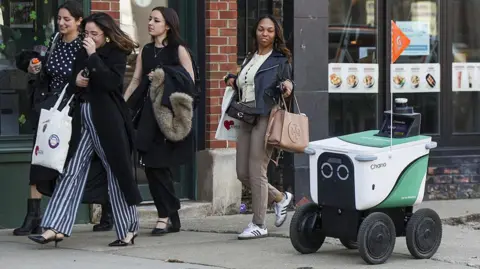
The first time I saw a delivery robot on my street, it felt like a scene from the future. It moved smoothly, almost like it had a mind of its own.
That feeling shifted when, a few days later, the robot bumped a cyclist and made my whole family step onto a stop sign just to get past it. It made the sidewalk feel unsafe and crowded.
Robots that carry snacks and groceries use cameras, sensors and GPS to navigate. Companies say they reduce traffic and cut emissions. Yet councils in Chicago, Toronto, California and other places are suing for clarity, running bans or limiting the streets they can roam.
John Roberts, a Chicago resident, worries that people would have to step out of their street to avoid the machines and that safety incidents would rise. He says he has collected more than 4,400 signatures for a petition to suspend all robots in the city until tests and clear rules are in place.
Some cities debate whether the robots are friendly, claiming they can see objects and walk safely. Yet vandalism in Sheffield and broken‑down bots in Glendale have forced councils to think about regulations, insurance, permitting fees and limits in high‑pedestrian areas.
A trade union boss Alex Marshall says that if delivery robots become permanent, many people in fragile jobs could be lost. He insists that policy must rescue people, not displace them.
By 2034, experts expect 2.1 million robots worldwide, but regulation shows no clear path: some liberal, some restrictive. The debate boils down to who gets to walk on our streets, who gets the gear or the job, and what kind of city life we want.
We can’t hold back the future, but we can shape it. The conversation is already happening in cities and on social media, and your voice matters.