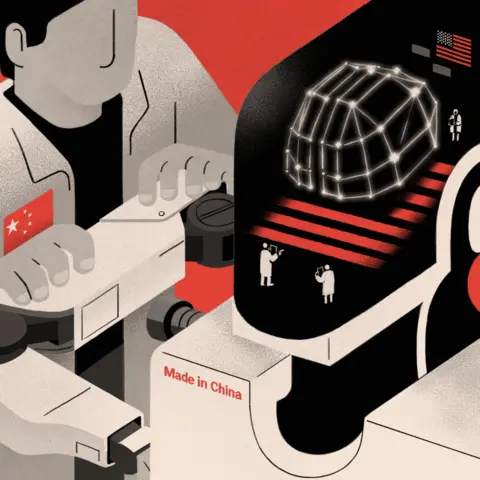
In the second half of the 20th Century, it was the race to develop nuclear arms that occupied some of the finest minds in the US and the Soviet Union. Now, as global dynamics shift, the US finds itself in a different kind of race with a different adversary: China, with a focus on Artificial Intelligence (AI).
This battle is occurring not just in high-tech labs, but also on university campuses and in startup offices, involving immense financial stakes. AI research is now costing trillions of dollars, with both nations vying for dominance in distinct areas: the US specializes in AI brains, while China excels in AI bodies, particularly in robotics.
On November 30, 2022, OpenAI launched ChatGPT, a revolutionary chatbot that quickly captured attention and demonstrated the power of AI brains. Experts agree that the US holds a strong lead in this arena, with major companies racing to develop competing technologies.
However, a senior US official noted that the true strategic advantage lies in advanced computing hardware—specifically in microchips designed and controlled by American firms, predominantly Nvidia. Through stringent export controls, the US has been preventing China from accessing these critical resources.
In a bold move, China counter-attacked the AI arena by launching its own LLM, DeepSeek, in January 2025. Despite costing much less to produce than US equivalents, it showcased similar capabilities, sending shockwaves through the US stock market and proving that China too can play the AI brain game.
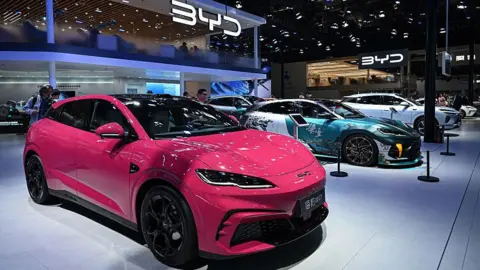
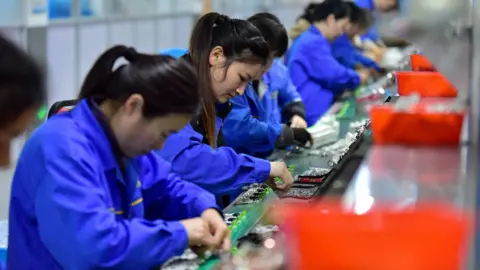
While the US maintains a clear edge in AI software and chip technology, China leads in robot manufacturing and humanoid robots. As both nations race to combine these two pillars of AI, the outcome is uncertain. Industry experts suggest that the competition will depend on who can effectively deploy AI across sectors and set global standards.
In this high-stakes environment, the AI race is not just about technology, but about the future shape of global power. With each country adopting different approaches and rules, the ability to win this technological race could alter the balance of power in the 21st century.