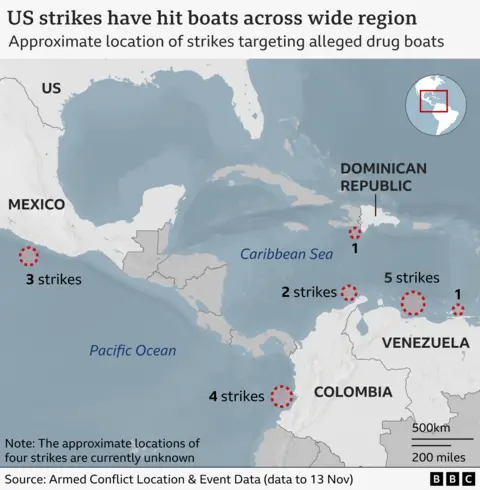
US Defence Secretary Pete Hegseth has stated that he did not personally see survivors before a deadly follow-up strike on an alleged drug boat in the Caribbean. An initial strike reportedly left two survivors clinging to the burning vessel, before a second strike was allegedly ordered that left them dead. This incident has raised questions about the legality of the actions taken by US forces.
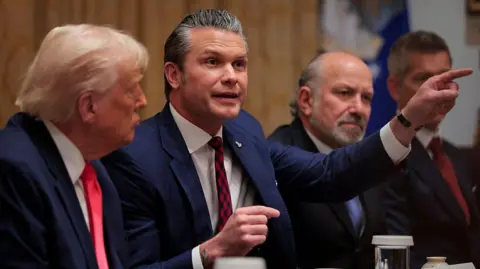
During a cabinet meeting, Hegseth referred to the chaotic conditions of war, suggesting that the situation was misunderstood due to the fog of war. The White House has confirmed Admiral Frank Bradley authorized the second strike.
Reports indicate that the strike has sparked concerns from both sides of the aisle in Congress, leading to calls for investigations. Hegseth clarified he observed the initial attack live but was unaware of the follow-up attack until later. President Trump expressed his support for the strikes but distanced himself from the decision for the second strike.
In the months following the incident, over 80 fatalities have resulted from US military actions against drug trafficking vessels in the Caribbean and Eastern Pacific. While the administration cites these actions as necessary for national security, critics highlight potential violations of international laws regarding the treatment of combatants. As lawmakers prepare for oversight efforts, the legal and ethical ramifications of these military operations await further scrutiny.
During a cabinet meeting, Hegseth referred to the chaotic conditions of war, suggesting that the situation was misunderstood due to the fog of war. The White House has confirmed Admiral Frank Bradley authorized the second strike.
Reports indicate that the strike has sparked concerns from both sides of the aisle in Congress, leading to calls for investigations. Hegseth clarified he observed the initial attack live but was unaware of the follow-up attack until later. President Trump expressed his support for the strikes but distanced himself from the decision for the second strike.
In the months following the incident, over 80 fatalities have resulted from US military actions against drug trafficking vessels in the Caribbean and Eastern Pacific. While the administration cites these actions as necessary for national security, critics highlight potential violations of international laws regarding the treatment of combatants. As lawmakers prepare for oversight efforts, the legal and ethical ramifications of these military operations await further scrutiny.