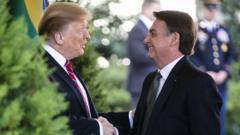
US President Donald Trump has thrown Brazil into a political whirlwind after announcing potential tariffs of up to 50% on Brazilian goods. This move is seen as a sharp jab aimed at the current Brazilian administration under Luiz Inácio Lula da Silva and a show of support for former president Jair Bolsonaro, who faces legal troubles from his past governance.
In his statement, Trump accused Brazil of unfairly targeting American tech companies and criticized the ongoing investigation into Bolsonaro's involvement in alleged election interference. The threat of tariffs adds another layer of tension to an already strained US-Brazil relationship, one that has been further complicated by the international BRICS group's anti-American rhetoric.
Lula, countering Trump's threat, asserted Brazil's sovereignty on social media, while also contemplating reciprocal tariffs against US products. Analysts are split on the consequences; some believe that Trump's intervention might bolster Bolsonaro's political image as a victim of external aggression, providing him with a potential platform for his supporters.
However, the tariffs could backfire, particularly affecting Brazil's key agribusiness sector, which aligns closely with Bolsonaro's base. The potential economic fallout is making some strengthen their allegiance to Lula, viewing Trump's announcements as an intrusion into Brazilian affairs.
In this intricate game of political maneuvering, Trump’s tariffs are not just economic tools but may alter Brazil's political landscape as voters rally around or against their leaders amid this new challenge. There’s already speculation about how this could influence Brazil's future elections, highlighting the interconnectedness of trade and politics in an increasingly globalized world.