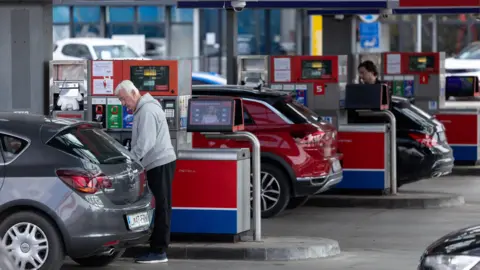
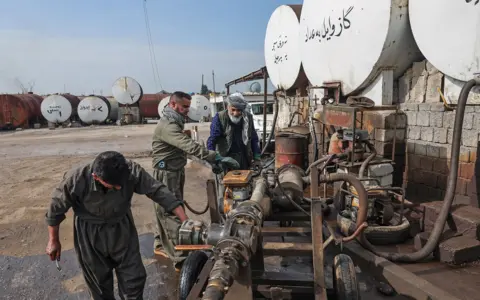
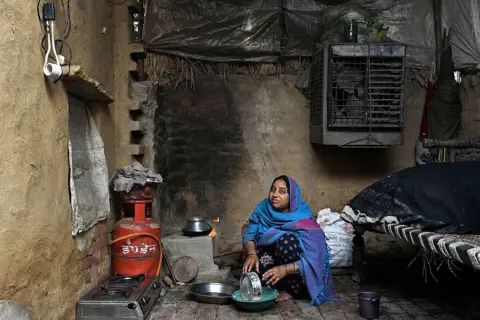
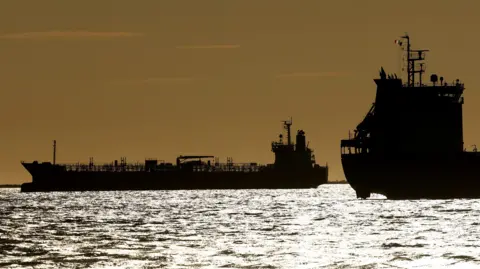
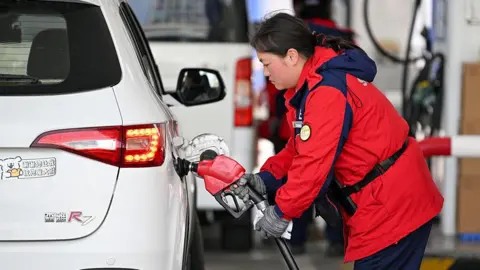
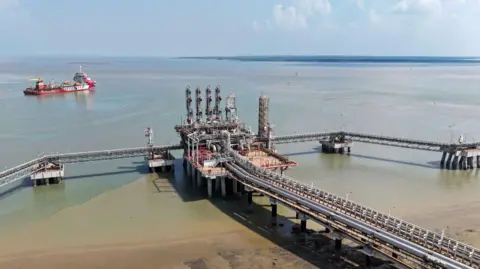
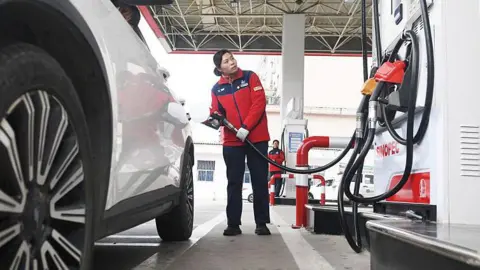
China has dialled back on planned fuel price hikes in a bid to 'reduce the burden' on drivers, as energy costs surge amid the Iran war. The local price of petrol has jumped by about 20% since the start of the conflict, which has seen Iran effectively close one of the world's busiest oil shipping channels, the Strait of Hormuz. Gasoline and diesel prices were initially set to rise by 2,205 yuan (£239; $320) and 2,120 yuan per tonne respectively – but after government adjustments, the increases will be nearly halved to 1,160 yuan and 1,115 yuan, starting Tuesday. More than 300 million people in China drive cars that run on petrol or diesel, with Gulf countries a major source of the country's oil. Long queues of cars had formed outside petrol stations in multiple Chinese cities over the weekend, with some stations having to post notices that they had run out of fuel. The latest price hike was the country's fifth and largest of the year so far - even with the reduction. On Tuesday, the price of Brent crude oil jumped above $100 a barrel. Despite its reserves, Beijing has shown signs of caution to manage its supplies in the short term by reportedly ordering oil refineries to temporarily halt fuel exports. Other Asian countries are implementing their own cost-cutting measures in response to rising energy prices, with Philippines transport groups planning strikes and public institutions in South Korea cutting car usage.
China Cuts Fuel Price Hikes Amid Rising Energy Costs
China Cuts Fuel Price Hikes Amid Rising Energy Costs
In a move to alleviate the financial burden on drivers, China has decided to reduce planned fuel price increases due to surging energy costs linked to the ongoing Iran war.
China is reversing its planned fuel price hikes to ease the economic strain on its drivers as energy costs climb significantly because of the Iran conflict. Originally, fuel prices were set to rise sharply, but adjustments have nearly halved these increases to mitigate the impact on consumers. As petrol prices have surged by around 20% since the beginning of the conflict, the government aims to stabilize the domestic market amidst long queues forming at gas stations across cities.