In brief
The Federal Reserve has chosen to keep interest rates unchanged, currently between 3.5%-3.75%, amid rising inflation concerns stemming from the US-Israel conflict in Iran that has led to increasing oil prices. Despite pressure to lower rates, policymakers are cautious as they navigate a complex economic landscape marked by mixed job reports and inflationary risks. Predictions indicate inflation may rise to 2.7% by year-end, influenced by external factors like oil prices and domestic tariff policies.
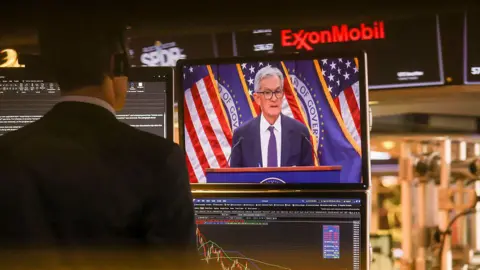
The US central bank has voted to hold interest rates steady again, as a spike in oil prices since the start of the US-Israel war with Iran raises economic uncertainty and threatens to drive up inflation. The decision, which was widely expected, left the Federal Reserve's key interest rate in the range of 3.5%-3.75%, where it has stood since December. Despite pressure from US President Donald Trump to slash borrowing costs, policymakers have been moving cautiously, facing a tricky combination of rising prices and mixed signals from the job market. Analysts suggest that the war has decreased the likelihood of a rate cut, pushing the timeline back into next year. Fed chairman Jerome Powell indicated that future cuts would depend on the trajectory of inflation, emphasizing the unpredictability of the conflict's economic impact. Overall, Fed board members anticipate inflation to rise to 2.7% by the end of the year, and project a steady unemployment rate of 4.4%.