The U.S. envoy to the Middle East, Steve Witkoff, announced the start of phase two of President Donald Trump's peace plan aimed at resolving ongoing conflicts in Gaza. A new technocratic Palestinian government has been established in the territory as part of this initiative.
This new phase follows the first, during which Hamas and Israel agreed to a ceasefire, exchanged hostages, and initiated a partial withdrawal and aid surge.
Witkoff emphasized that this phase not only seeks reconstruction efforts in Gaza but also demands full demilitarization, including disarming Hamas and other militant groups operational in the region.
While Witkoff expressed hope for progress, he warned that failure to comply with U.S. expectations, including returning the body of the last Israeli hostage, could lead to serious repercussions.
However, the journey may be complicated. Hamas has historically resisted disarming without the establishment of a fully independent Palestinian state, and Israel's commitment to a complete withdrawal from Gaza remains uncertain.
The ceasefire itself is precarious, with ongoing accusations of violations from both sides, and recent reports indicate that over 450 Palestinians have died in Israeli strikes since the ceasefire was enacted.
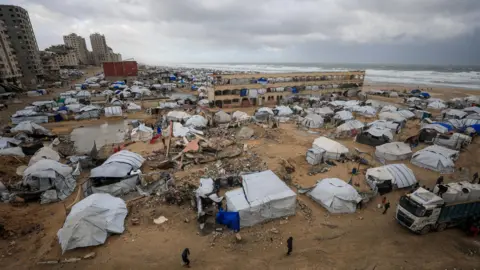
The humanitarian situation in Gaza continues to deteriorate, with the UN calling for unrestricted aid access to alleviate the conditions.
Despite these challenges, regional mediators welcomed the formation of the new Palestinian Technocratic Committee to govern, indicating that collaboration could help stabilize the situation and improve humanitarian conditions.
Witkoff stated, "This transition signifies progress," as he highlighted upcoming announcements regarding the board that will oversee the peace process and reconstruction.
The deadline for Hamas to fulfill its obligations has not been clearly defined, increasing the tension as factions navigate their next moves amidst an unfolding crisis.